Posts Tagged ‘literary legends’

William Gay, 1941-2012

William Gay, 1941-2012

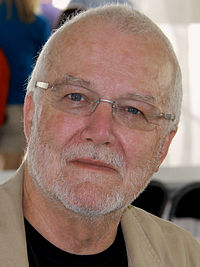
Novelist William Gay, who died late last month at the age of seventy, was the topic of several conversations I had at AWP this year. Most of the talks centered on Gay’s work, which was sublime, or his soul, which was sweet; we fond remember-ers would all have a sip of beer and nod somberly. [...]

Book of the Week: <em>The Flight of Gemma Hardy</em>, by Margot Livesey

Book of the Week: The Flight of Gemma Hardy, by Margot Livesey

This week’s feature is Margot Livesey’s new novel, The Flight of Gemma Hardy, which was published last week by HarperCollins. Livesey is the author of six previous novels: Homework (1990), Criminals (1996), The Missing World (2000), Eva Moves the Furniture (2001), Banishing Verona (2004), and The House on Fortune Street (2008). Her first book, Learning [...]

Present Everywhere, Visible Nowhere: Flaubert's Eye for Detail

Present Everywhere, Visible Nowhere: Flaubert’s Eye for Detail

“What a bitch of a thing prose is!” Gustave Flaubert wrote in a letter to his lover Louise Colet in 1852. “It’s never finished; there’s always something to redo. Yet I think one can give it the consistency of verse. A good sentence in prose should be like a good line in poetry, unchangeable, as rhythmic, as sonorous.” In this essay, contributing editor Travis Holland meditates on Flaubert’s influence and legacy in fiction.

User PapaHem99 gives this place 3 stars

User PapaHem99 gives this place 3 stars

First, there was Ernest Hemingway, Yelper:
Infusion Tea and Coffee House
Category: Coffee & Tea
THREE STARS
I got up late and the sun was already high and I had been drunk the night before. The barista brought me a cup of coffee and asked if I wanted anything else and when I said no she left. The coffee [...]

Book of the Week: <em>Chronic City</em>, by Jonathan Lethem

Book of the Week: Chronic City, by Jonathan Lethem

This week’s feature is Jonathan Lethem’s most recent novel, Chronic City, published by Doubleday in 2009. Lethem is the author of seven other novels, three collections of stories, and two books of essays. He’s also contributed to dozens of edited anthologies, journals and magazines, and garnered numerous awards during his career, most notably a National [...]

<em>The Box: Tales from the Darkroom</em> by Günter Grass

The Box: Tales from the Darkroom by Günter Grass

Germany’s literary superstar Günter Grass is obsessed with the past. His second memoir, The Box, challenges readers to distinguish between fact and fiction in latter half of the author’s life. His unconventional approach might undermine the memoir form, but the result is a compelling account of Grass’ compulsion to write.

<em>The Cat’s Table</em>, by Michael Ondaatje

The Cat’s Table, by Michael Ondaatje

In The Cat’s Table, Ondaatje returns to Sri Lanka as the story follows three boys who, along with a cast of eccentrics, make their way from Colombo to England. By turns adventurous, mysterious, and wistful, the novel traces the search for belonging amidst strangers and strange lands. Charlotte Boulay considers Ondaatje’s latest beautiful offering in the context of his larger body of work.

[QUOTES & NOTES] The Problem with Brilliant Students

[QUOTES & NOTES] The Problem with Brilliant Students

How does one teach those phenomenal, force-of-nature fiction writing students who walk into a classroom with their own identities? With the expectation that the teacher will change, too, writes Steven Wingate in his latest Quotes and Notes column.

The Problem of the Author: On Not Reading Autobiography into the Writing of Andre Dubus

The Problem of the Author: On Not Reading Autobiography into the Writing of Andre Dubus

What is the difference between art and life, between the writer and the writing? In this essay on the late, great Andre Dubus, we learn how Dubus recognized “transformative moments” as authors Richard Ford and Anne Beattie, among others, weigh in on his talents, and his legacy.

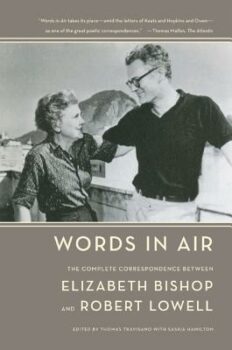
[Contrasts & Charms] Bishop and Lowell Read Everything

[Contrasts & Charms] Bishop and Lowell Read Everything

What does our reading have to do with our writing, exactly? In this first installment of a new column, Contrasts and Charms, Charlotte Boulay departs from traditional talk about fiction, reflects on her own reading list, and finds comfort and enthusiasm in reading Elizabeth Bishop and Robert Lowell’s letters to each other, in which they discuss everything they read—and the fact that they read all the time.