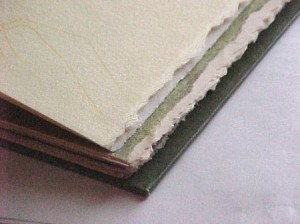
Photograph from My Wings Books - http://www.mywingsbooks.com/coll-terms/edg02_.shtml
If all the recent talk about the iPad and the Amazon/Macmillan ebook pricing catfight has you longing for a simpler time, look no further than this ode to the deckle edge on The Millions:
Opening a book can already feel like opening a gift. Armed with a knife and freeing the pages and the story hidden beneath the folds, it becomes something more, “a penetration of its secrets” and an act of discovery, shot through with a suggestion of violence and danger or of the painful gestation of the words themselves.
This act of cutting open pages to read a book has been lost (one imagines the paper knife arrangement wouldn’t go over well with the TSA), and right now, all over the world, people are reading their books on screens and the idea of even opening a cover and turning pages may one day seem odd as well.
This idea of the book as an anachronism may explain the persistence of the deckle edge, which is now created not by the reader with a knife but by leaving one edge of the page untrimmed during the printing and binding process.
I’ll admit I’m not crazy about the deckle edge myself: it makes the pages harder to turn. And when I’m caught up in a great book, even a second or two of fumbling with the page is too long to wait. But I couldn’t agree with C. Max Magee more when he points out that books are objects of beauty, not just information. Those who appreciate that beauty–in the cover, in the deckle edge, in the smell of the paper–may be the ones to save paper books.