Every Line Matters: In Memory of Barry Hannah (1942-2010)

Every Line Matters: In Memory of Barry Hannah (1942-2010)

This morning I woke to hear the sad news that Barry Hannah had died. He was 67, and the apparent cause was a heart attack, according to the Jackson Free Press. Barry had had several bouts with cancer over the last ten years, yet I was still shocked to hear that he was gone. I guess I’d come to think of him as oddly invincible.

A Valentine: Books We Loved in 2009

A Valentine: Books We Loved in 2009

Every book we feature on Fiction Writers Review has won the admiration of our reviewers. But because it’s a new year, and it’s award season, and today is the official holiday of love, we asked our contributors to tell us which books of 2009 they most adored, cherished, and crushed on. What we received often transcended mere lists; writers shared why these certain books affected them, woke them up, even made them jealous. So in addition to the “favorites” that received the most votes, we’ve also included some of these endorsements and mini-reviews. Most selections are arranged by genre (Novel, Story Collection, etc.), and then there are less conventional categories–like Book You Loved But Would Be Embarrassed to Be Caught Reading.

Writing the Great American <span style="text-decoration: line-through;">Novel</span> Video Game

Writing the Great American Novel Video Game

For some time I was one of few standing firmly in both camps—writer and gamer, fiction-fiend and pixel-popper. But the innovative nature of Next-Gen gaming, with its leaps in technology and massive install-base, means games have developed new depth–and the future of gaming promises to look a lot more like literature than flight simulators. This is, in many ways, the rise of a new novel. Like its lexicographic predecessor, the pixilated form revels in moral ambiguity, character motivations, conflicts between free will and fate.

[QUOTES & NOTES] Gotta Serve Somebody: Writers and Academic Homes

[QUOTES & NOTES] Gotta Serve Somebody: Writers and Academic Homes

“Everywhere I go, I’m asked if the universities stifle writers. My opinion is that they don’t stifle enough of them.” — Flannery O’Connor

It’s hard to argue with your heroes, though it’s significantly easier after they’ve died. Flannery O’Connor—the first writer I wanted to be—refers in this quote to creative writing workshops, which were just becoming the new standard for writerly apprenticeship when she launched her career. But I don’t have the same issues as she had with the workshop paradigm as it’s now practiced, or with the proliferation of creative writing programs.

The Real Question

The Real Question

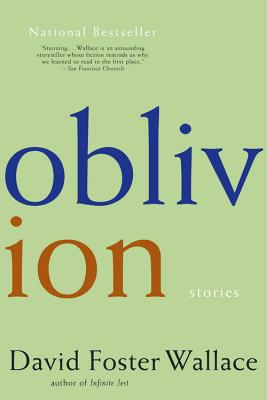
Twice recently, while riding the train, I’ve noticed someone reading David Foster Wallace’s Oblivion, and both times I’ve found myself wondering if– hoping, really–the someone was reading a particular story from that book: “Good Old Neon.”

“Good Old Neon” offers in heartbreaking detail a first-person account of the psychological suffering that leads the apparent narrator, Neal, to suicide. The story begins, “My whole life I’ve been a fraud,” and goes on to unpack the causes and consequences of that statement.

[QUOTES & NOTES] Best Shots and Shortcuts

[QUOTES & NOTES] Best Shots and Shortcuts

“Always give your characters their best shot.” — Stuart M. Kaminsky

As writers, we can add on (and on) to the external details of a character, trying to make that person real in the way that Pinocchio hopes to become so. Theoretically, we might be able to acquire enough details in a personality inventory for our readers to accept our characters as convincing. But ultimately, as Stuart Kaminsky knew, this way of creating character doesn’t work because it’s the subtext of our characters’ lives that make them real. Using the “inventory” process to get to know them is fundamentally flawed because it makes us lazy.

QUOTES & NOTES   The Humble Counterpart: Fiction, Self-Examination, History, and the Reader

QUOTES & NOTES The Humble Counterpart: Fiction, Self-Examination, History, and the Reader

“Popular art is the dream of society; it does not examine itself.” –Margaret Atwood

My Kindle, Myself

My Kindle, Myself

It was cold and white and looked not unlike a refrigerator for guinea pigs. It had far too many buttons. It stalled for an annoying millisecond when flipping between pages. There was no way I would ever be able to suspend my disbelief and fully enter the world of a book.

And then, somewhere over Georgia, I changed my mind.

Magic and Music Steer this Vessel: On Jorge Luis Borges’s <em>This Craft of Verse</em>

Magic and Music Steer this Vessel: On Jorge Luis Borges’s This Craft of Verse

In This Craft of Verse, Jorge Luis Borges’s collected Norton Lectures, Borges diverges–with sparkling erudition–from conventional forms, offering lectures that are not arguments, but gentle provocations. Remarkably, these visionary pieces were composed at a time when Borges was nearly blind. By this time, as editor Calin-Andrei Mihailescu writes in the book’s postscript, Borges could see “nothing more than an amorphous field of yellow.” We quickly learn, however, that his mind’s eye was as sharp and discerning as ever.

[QUOTES AND NOTES] In Praise of Perpetual Self-Reinvention

[QUOTES AND NOTES] In Praise of Perpetual Self-Reinvention

“Every book I publish is an opportunity for me to reinvent myself as a writer.” — Steve Katz

The easy thing to do when we finish one writing project, the default thing, is to simply think about what we’re going to write next. Katz’s words, however, call us to engage in a deeper kind of reconsideration of ourselves, because what we write and who we are as writers are two crucially different things.