Suspend Your Disbelief

Archive for 2010

Shop Talk |

Map Your Reading

Google Lit Trips uses Google Earth to show readers important locations in works of literature. For example, if you’re reading The Grapes of Wrath, you can follow the Joads’ travel along Route 66, or while reading Blood Meridian by Cormac McCarthy, you can track the kid from Texas to Mexico and beyond. The site’s main focus is on children’s and YA lit, with maps for classics such as Make Way for Ducklings, The Slave Dancer, and Paddle-to-the-Sea. But there are a growing number of “trips” for adult literary fiction as well, including The Road by Cormac McCarthy, A Portrait of […]


Shop Talk |

Sweet and sociable lit mag, 5 years old, seeks loving home.

Literary magazines: is there a source of greater guilt for writers? We submit to them. We cross our fingers, make a small-animal sacrifice, and hope they’ll publish our work. But do we really read them? The Council of Literary Magazines and Presses (CLMP) has launched a new program to encourage creative writing students to read literary magazines. From the program announcement: The Lit Mag Adoption Program for Creative Writing Students allows undergraduate and graduate creative writing professors to include literary magazines in their courses. Students receive discounted, 1-year subscriptions for selected literary magazines (professors receive a free “desk-copy” subscription). Each […]


Shop Talk |

The World's First (Really) Commercial Novel

Ever wonder what would happen if the plotline of a novel were up for sale? Commercial Novel aims to find out. By commenting on the site—and making a donation to the site via PayPal—you can influence what happens in the next chapter of the novel. The comment with the highest donation shapes the next segment of the book. It’s sort of a three-way cross between an improv show, an exquisite corpse, and a charity auction. The site’s authors explain the motivation behind the project: We are fictional writers who lost our fictional middle-class lifestyle with the onset of the recession.* […]


Shop Talk |

Janet Fitch's Rules for Writers

We’re writers! We’re creative souls! We love original thought! But for some reason, we also love lists of rules—especially rules that tell us how to write (and how not to write). Call it one of life’s great paradoxes. The most widely disseminated list is probably Elmore Leonard’s rather prescriptive catalogue of things to avoid (“Never use a verb other than ‘said’ to carry dialogue”). Many authors, before and since Leonard, have tried to boil their advice down into neat bullet points, with varying success. But Janet Fitch, author of White Oleander, has posted her own “10 Rules for Writers,” and […]


Shop Talk |

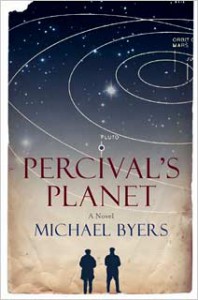
Percival's Planet Launches Today

We’re pleased to announce that Percival’s Planet, the most recent novel by FWR Contributor Michael Byers, was released today. The book was inspired by the true story of the discovery of Pluto and takes place during the late 1920s. Told from multiple perspectives–a farm boy in Kansas who grinds his own telescope lenses, a young woman losing her grip on reality, a Harvard-educated scientist trying to work through Percival Lowell’s mathematical equations to find Planet X, and the heir of a chemical company fortune who’s decided to become a paleontologist in the hopes of establishing his own reputation–the novel explores […]


Shop Talk |

Recently on FWR…

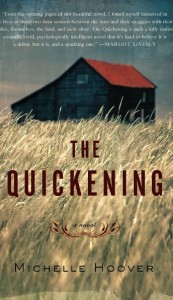
Here’s a roundup of the latest features FWR was pleased to bring you over the past two weeks: T.L. Crum reviews Michelle Hoover’s debut novel The Quickening: The Quickening follows the journeys of two Iowa families trying to build their lives amid the hardships of the Great Depression. Like Hoover, I’m a descendent of Iowa farmers, so I was interested in this story, curious to learn what my ancestors might have encountered as they built their farms in early 1900s, when so much was at stake and so little could be counted on. While there are subtle references to what […]


Shop Talk |

The (U.K.'s) Best Underground Lit Mags

The UK’s Independent highlights their favorite new underground literary magazines “stemming from the edgiest enclaves of the book-loving universe”: Indeed, the editors of these fledgling organs claim that low budgets spur inventiveness. While Five Dials’ inaugural issue contained an 1852 letter from Flaubert to Louise Colet, the first in a series of “exemplar letters”, in more recent times it has juxtaposed articles on gangster rap with more high-brow fare. “It’s good to try to challenge the more established magazines,” says [Craig Taylor, author and editor of Five Dials]. “They don’t always deserve to be there. You need newer titles with […]


Shop Talk |

B-Movie Sparks Rick Moody's New Novel

Adaptations usually go from novel to film (okay, unless you’re Dave Eggers, in which case all bets are off). But later this month, Rick Moody will publish The Four Fingers of Death—a 700-page novel involving a (fictional) novelization on the B-movie The Crawling Hand. io9 takes a closer look at the novel: It’s the year 2025, and the NAFTA bloc has fallen into such a perilous decline that we barely have an economy or a functioning society any longer, and we’re at the mercy of the much more powerful Sino-Indian economic bloc. A failed writer, Montese Crandall, wins the rights […]


Shop Talk |

If you were reading this on paper, you'd be finished by now.

Perhaps our recent posts on e-books have you jonesing for an iPad or a Kindle. Or maybe they’ve made you nostalgic for a good old print hardback. Either way, here’s something else to consider: reading on paper is faster than reading on a screen. The Nielsen Norman group (no, that Nielsen) found that reading in electronic format was up to 10.7% slower than reading a paper book. Reports Macworld: Nielsen’s findings were based on the performance of 24 users who “like reading and frequently read books.” The subjects each read different short stories by Ernest Hemingway on all four platforms, […]


Reviews |

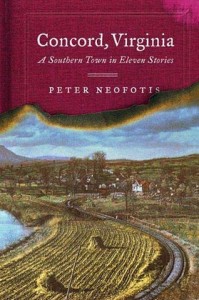
Concord, Virginia, by Peter Neofotis

The yarn-like stories that make up this debut collection recount the life of an imagined town in northern Virginia. Unlike a traditional collection, Neofotis chooses an oral storytelling method to structure these stories, utilizing the conceit that the narrator is not just the vehicle through which we are relayed the narrative but an actual character himself, one who sits down beside us to spool out poignant stories, juicy pieces of gossip, and far-fetched legends from his small town.