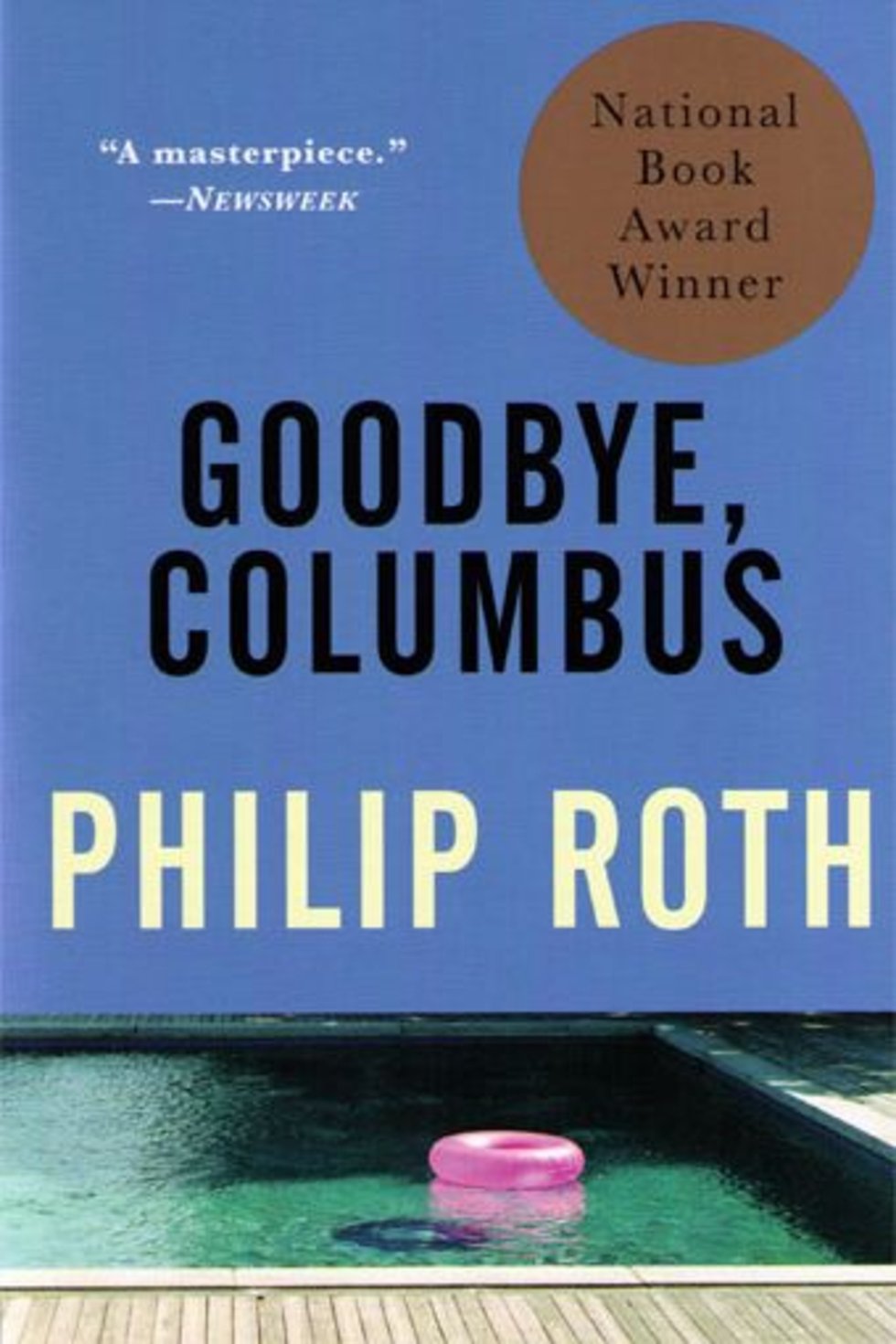
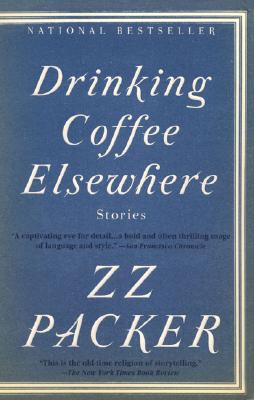
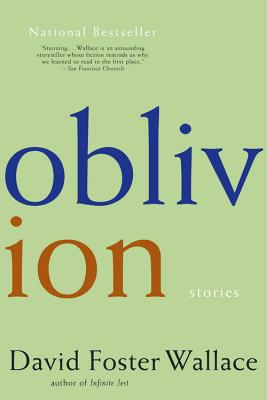
Dear readers, apologies for the lack of posting this past week; I have been readying to move from Brooklyn to Columbus, Ohio, and I remain neck-deep in logistics and work. As for FWR, exciting features are coming soon. I have a stack of material from our fearless writers — interviews! reviews! essays! book news! — just waiting to be posted, and by August 2 we will return to our regularly scheduled (or even somewhat enhanced) program. Come back then, and come back often.
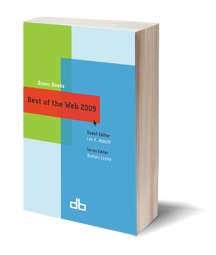
Because we are an online journal ourselves, it’s no surprise that FWR is excited to announce the release of The Best of the Web 2009, published by DZANC Books. This is their second volume of the annual anthology, which selects the best poetry, fiction, and nonfiction published online during the previous year. Click here to read my full review of Best of the Web 2009 here on FWR. Big Congratulations to all the writers included in this year’s collection, and to the editors for bringing together such a range of voices and talent.
Each summer Dzanc Books releases The Best of the Web, an annual anthology of the year’s best poetry, fiction, and nonfiction that was published online. Of all the “Best of” collections that come out each year, this anthology, with its multi-genre interests, probably has the most in common with The Best American Non-Required Reading series. And like that anthology, this one also shares an interest in work that is driven by voice, that isn’t afraid to test the limits of its form.
Ptolemy was trying to describe a system that didn’t exist. His point of view, literally, was wrong. He wasn’t looking at the planets from a fixed center, but from a body that was itself circling the sun. Copernicus’ eventual understanding of this fact led swiftly to the discovery of several other beautiful truths, including those of Kepler, Brahe, and Newton – suggesting that where you stand has everything to do with what you can see. And that if you’re standing in the wrong place, or facing the wrong direction, you’re going to see a very strange, distorted view.
All of which is to say, point of view matters. It might be proposed that an author does well to be relatively Copernican, even if his characters start out almost entirely Ptolemaic. … The supreme example of a character remaining Ptolemaic within a Copernican story is Chekhov’s “Lady with the Pet Dog”. In this story, Chekhov knows nearly everything, and Anna knows, perhaps, only a little less – while the point of view character Gurov knows almost nothing of what goes on around him.
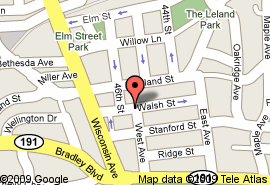
Via Matthew Hittinger, here is a call for submissions from The Writer’s Center just outside D.C. (in Bethesda, MD). Emerging Writer Fellowships: Call for Submissions CALL FOR SUBMISSIONS The Writer’s Center, metropolitan DC’s community gathering place for writers and readers, is currently accepting submissions for several competitive Emerging Writer Fellowships. Emerging Writer Fellows will be selected from applicants who have published up to 2 book-length works of prose and up to 3 book-length works of poetry. We welcome submissions from writers of any genre, background, or experience. Emerging Writer Fellows will be featured at The Writer’s Center as part of […]
And this article, in fact, is 1.5 years old. But here are what Bob Harris (via the NY Times‘s “Paper Cuts” blog) names the “seven deadly words of book reviewing,” worn expressions to avoid if you want that novel you’re reviewing to sound remotely fresh. Briefly, they are: poignant, compelling, intriguing, eschew, craft (verb), muse (verb), lyrical; read the whole entry for Harris’s compelling case against each. (Oops.) I’ll happily give the rest up…but can I keep lyrical? And don’t miss the readers’ comments; some of my favorites include: The “much-anticipated debut.” By whom? The author’s landlord? “that said” makes […]
Some books ARE more equal than others. When a publisher changes its mind about publishing a Kindle edition, what happens to the e-book you downloaded? It disappears.
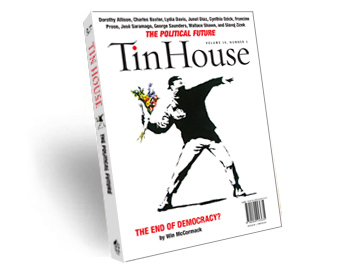
Warm congratulations to FWR contributor Natalie Bakopoulos, whose story “Fresco, Byzantine,” was just selected for an O’Henry Prize! The story was published by Tin House in their fall 2008 Political Future Issue and will appear in the O’Henry Prize Stories 2010 anthology next year.
Back in May we announced the launch of Waccamaw’s Spring 2009 issue as one of our recommended lit journals. Starting today, this award-winning publication out of Coastal Carolina University will begin their summer reading period for unsolicited work. From July 15 – August 31, Waccamaw will accept unsolicited submissions of poems, stories, and essays via their online Submission Manager system. Authors should limit submissions to 3-5 poems, one story, or one essay. They request only one submission in a single genre per reading period, and do not consider submissions of previously published work in any form (including prior internet publication). […]