Suspend Your Disbelief

Recent Posts

Shop Talk |

The Story Prize goes to …

Steven Millhauser! Yes, I know that news broke last week. But Anne and I attended the event on behalf of FWR – quite the literary crowd, Hannah Tinti further down our row, spotted Paul Vidich in the aisle. Here are some highlights: Don Delillo described going back to stories he’d written in the late 1970s and early 80s and not changing anything. Oh, wait, he took out all the semicolons, colons, and commas that magazine editors had introduced. He said it best: “I was a free man.” Cormac McCarthy, eat your heart out. Steven Millhauser, white floss of hair aglow […]

Interviews |

Surfers and Cowboys: An Interview with Robert Garner McBrearty

Beneath an unassuming demeanor, Pushcart Prize-winning Robert Garner McBrearty writes stories of the revolution. The former dishwasher on the mythologies of the American West, the bravery of small presses, Colonel William B. Travis, and why he feels solidarity with scrappy underlings.


Shop Talk |

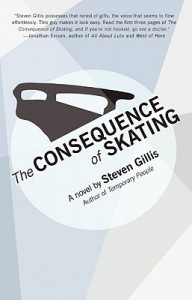
The Consequence of Skating: Today's B&N Daily NOOK Find

Most of our readers know Steven Gillis as the founder of 826michigan in Ann Arbor, or as the co-founder and publisher of the non-profit literary press Dzanc Books. Yet Steve is also a talented writer. He is the author of four novels as well as a collection of stories, his short fiction has appeared in dozens of literary journals, and he’s been nominated for six Pushcarts. Most recently, his novel The Consequence of Skating was a 2011 finalist for the Independent Publisher Book Award. And today the book is a B&N Daily NOOK Find, available for only $3.50. I happen to […]


Shop Talk |

Mommy, where do blurbs come from?

The always-fascinating TYWKIWDBI points us to the origin of the blurb. According to Wikipedia, The word blurb originated in 1907. American humorist Gelett Burgess’s short 1906 book Are You a Bromide? was presented in a limited edition to an annual trade association dinner. The custom at such events was to have a dust jacket promoting the work and with, as Burgess’ publisher B. W. Huebsch described it, “the picture of a damsel — languishing, heroic, or coquettish — anyhow, a damsel on the jacket of every novel” In this case the jacket proclaimed “YES, this is a ‘BLURB’!” and the […]


Shop Talk |

Book-of-the-Week Winners: Fires of our Choosing

Last week we featured Eugene Cross’s debut collection Fires of Our Choosing as our Book-of-the-Week title, and we’re pleased to announce the winners: Marisa Birns (@marisabirns) Amanda Persaud (@afavolosa) Colleen (@booksnyc) Congrats! To claim your free copy, please email us at the following address: winners [at] fictionwritersreview.com If you’d like to be eligible for future giveaways, please visit our Twitter Page and “follow” us! Thanks to all of you who are fans. We appreciate your support. Let us know your favorite new books out there!


Reviews |

Journal of the Week: Lapham's Quarterly

Our latest Journal of the Week, Lapham’s Quarterly, is a true curator of culture. By juxtaposing the old and the new, Carolyn Gan says in this profile, it’s the “literary equivalent of a really good mix tape, where obscure songs of various styles come together to tell you something more about the music.”


Shop Talk |

Love it, or hate it?

Is it better to be the only one who loves an unpopular book, or the only one who hates a popular book? Thanks to the Tumblr site I Love Charts, you can now weigh the pros and cons: . Further Reading: Why liking a book—or its popularity—shouldn’t be part of a good review Rick Moody is a popular author writers love to hate. What’s the deal with that?


Reviews |

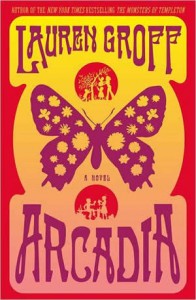
Arcadia, by Lauren Groff

Lauren Groff’s second novel, Arcadia, gorgeously renders a commune’s rise, fall, and life-long resonance for the people who grew up within it. Unfolding as a series of snapshots, the book’s events span the birth of this late-1960s utopia and its central character, Bit Stone, to his middle age in a bleak—and imminent—dystopic future.


Shop Talk |

"My novel is going nowhere"

You may have said those words once or twice yourself, perhaps? (If not, please leave this blog. Now.) It may comfort you to know that you are not alone in that sentiment: even established writers think so, now and then—and have for decades, if not centuries. To prove it, Michael Hoffman has combed through the letters of Joseph Roth, finding every mention of his novel The Radetzky March, which would become his masterpiece. Here’s a sampling: November 20, 1930 Joseph Roth to Stefan Zweig: “‘The Radetzky March,’ it’ll be called, set in the Dual Monarchy from 1890 to 1914. I’ll […]