Suspend Your Disbelief

Archive for 2009

Shop Talk |

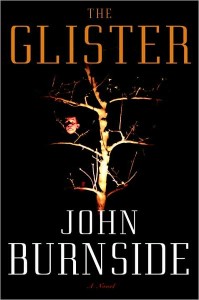
new review on FWR: The Glister by John Burnside

Click here to read Greg Schutz’s full review of this novel. Here’s a taste: What is The Glister? To my dismay as a reviewer but my delight as a reader, John Burnside’s seventh novel defies encapsulation. The title itself suggests the book’s strangeness: the word, a synonym of “glitter,” seems composed of equal parts “glisten” and “blister.” In the way it compounds beauty and ugliness, it is a microcosm of the book as a whole. The Glister is neither a straightforward horror story nor an allegory à la Animal Farm, though at times it masquerades as both.

Reviews |

The Glister, by John Burnside

What is The Glister? To my dismay as a reviewer but my delight as a reader, John Burnside’s seventh novel defies encapsulation. The title itself suggests the book’s strangeness: the word, a synonym of “glitter,” seems composed of equal parts “glisten” and “blister.” In the way it compounds beauty and ugliness, it is a microcosm of the book as a whole. The Glister is neither a straightforward horror story nor an allegory à la Animal Farm, though at times it masquerades as both.

Shop Talk |

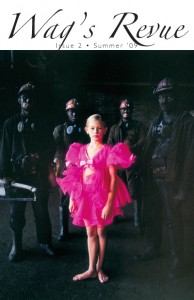
Wag's Revue releases Issue 2

On June 25, Wag’s Revue–a free, online-only literary quarterly–followed their exciting (and much-discussed) first issue with their second, which looks very promising. So why is this lit mag different from all other lit mags? In the words of Sandra Allen, the journal’s nonfiction editor, Wag’s Revue “aspires to marry the freedoms of the Internet with the strictures of a traditional printed quarterly, creating something entirely new (a ‘wag,’ if you will). It’s an exciting solution, I think, to print’s demise, and a good read for anyone interested in the future of the American literary quarterly.” From the press release: Faithful […]


Shop Talk |

new on FWR

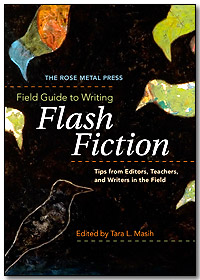
Blog readers, check out our latest features on the main site: [review] Sophie Powell recommends the Rose Metal Press Field Guide to Writing Flash Fiction (edited by Tara L. Masih), “an unprecedented gathering of 25 brief essays by experts in the field that includes a lively, comprehensive history of the hybrid genre.” [essay] – Laura Valeri engages with and rebuts the notion that fiction writers are “failed poets.” [interview] – Mary Westbrook talks with award-winning author Janet Peery about the particular process of expanding stories into novels, what being a “writer’s writer” really means, how she’d respond if a student […]


Shop Talk |

I wrote the news today, oh boy

On June 10, for one day only, Haaretz replaced its reporters with 31 of Israel’s literary writers, instructing them to cover the news. The result? Top stories about “integration at the giraffe enclosure, love in the cancer ward, mosaics in Tel Aviv, addicts at the Jerusalem rehab centre, and a visit to the grave of a holy man, among others” (via Metafilter). The Jewish Daily Forward‘s David Estrin describes the experiment: Among those articles were gems like the stock market summary, by author Avri Herling. It went like this: “Everything’s okay. Everything’s like usual. Yesterday trading ended. Everything’s okay. The […]


Shop Talk |

the controversy in the rye, part II

As the Catcher in the Rye lawsuit develops, lawyers and bookworms alike have begun to air their opinions. The Wall Street Journal‘s Law Blog speaks with Marc Reiner, a copyright lawyer, about the issues raised by the lawsuit and whether it has any merits: That issue — whether a fictional character is copyrightable — is a little unsettled. It’s most readily applied to characters that are graphic, like Mickey Mouse, or if the character has been in a series, like Tarzan. I’d probably lean toward thinking that Holden Caulfield is fleshed out well enough to be copyrightable. Some folks think […]


Shop Talk |

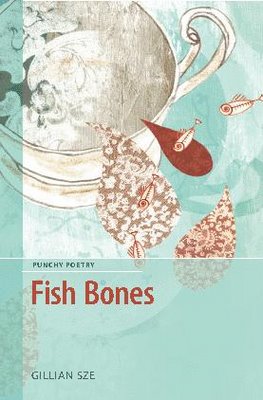
recommended read: Fish Bones by Gillian Sze

In the interest of full disclosure, I must admit that I love Gillian Sze. Not in a “we’re romantically involved” kind of way, but yes, we were classmates at Concordia University for our undergraduate degrees in Creative Writing, and from the first moment I read her work, I knew she was a great writer. So you’ll have to forgive me if I gush over her first book of poetry, Fish Bones (published by DC Books’ Punchy Poetry imprint), because I’ve always had a bit of a girl crush on her. Hopefully that doesn’t sound totally creepy and stalkeresque. I just […]


Essays |

All That Poetry

At Sewanee everyone mingled with everyone else—poets with playwrights with fiction writers, famous and not, published and not, emerging or well established. It didn’t matter. Therefore, when it was Andrew Hudgins’ turn to give a craft lecture, I was one of the first to go, eager to absorb what I could smuggle back to those students in my undergraduate workshop who had more of an ear for poetry than me, their fiction-writing professor. I needed to be at that lecture for professional obligations; I wanted to be there for personal desires. But just as I was beginning to reach towards the trellises of poetic symmetry, grasping for that hanging fruit, I heard Hudgins say, a mocking lilt to his voice, “…and then he became a fiction writer, like all failed poets tend to do.”


Reviews |

The Rose Metal Press Field Guide To Writing Flash Fiction: Tips from Editors, Teachers, and Writers in the Field, edited by Tara L. Masih

As a creative writing professor at Boston College, I frequently use collections of flash fiction, stories which usually run 1000 words or less. Given time limitations and the varying writing experience of my students, these versatile, word-limited pieces are a very approachable and satisfying form to work within. However, I always find myself floundering about when I try to explain and define this genre for the first time. It was therefore with keen interest that I picked up The Rose Metal Press Field Guide to Writing Flash Fiction, an unprecedented gathering of 25 brief essays by experts in the field that includes a lively, comprehensive history of the hybrid genre by editor Tara L. Masih.