Suspend Your Disbelief

Author Archive

Shop Talk |

Why Slow Thinking (and Slow Writing) Can Be Good for You

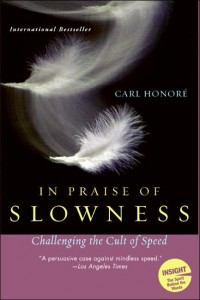
A while back, Anne blogged about J. Robert Lennon and the argument that writers are really working all the time. Here’s further reason to back away from the writing schedule and cut yourself some slack now and then. Carl Honore, author of In Praise of Slowness, makes a compelling case for “slow thinking” when it comes to finding new ideas: […] Slow Thinking is intuitive, woolly and creative. It is what we do when the pressure is off, and there is time to let ideas simmer on the back burner. It yields rich, nuanced insights and sometimes surprising breakthroughs. Research […]
Shop Talk |

"She calls us all by our last names."

Alexander Chee, on Annie Dillard: In my clearest memory of her, it’s spring, and she is walking towards me, smiling, her lipstick looking neatly cut around her smile. I never ask her why she’s smiling—for all I know, she’s laughing at me as I stand smoking in front of the building where we’ll have class. She’s Annie Dillard, and I am her writing student, a 21-year-old cliché—black clothes, deliberately mussed hair, cigarettes, dark but poppy music on my Walkman. I’m pretty sure she thinks I’m funny. She walks to class because she lives a few blocks from our classroom building […]


Shop Talk |

the writer as conversationalist

Are you “smarter in print than in person?” (I’m raising my hand.) And are you behind in your reading? (That’s me. Again.) In the Sept. 27 NY Times Sunday Book Review, Arthur Krystal investigates why good writers aren’t necessarily great conversationalists. Should we blame the antisocial demands of our work? Or do our mouths stammer because they’re out of practice — because our brains are used to the pace of writing (not to mention its magical editing function)? Or while our mouths make words, are our brains secretly elsewhere, still working on something? Or are they dormant, resting? Do our […]


Interviews |

Those Magic Carbons: A Conversation with Eileen Pollack

Brian Short talks to fiction guru Eileen Pollack about the juggling act of writing fiction, teaching writing, and directing the Creative Writing MFA program at the University of Michigan. Her advice to writers: Be bold.

“The first thing I love, when I read, is the language. I can’t read anything where I don’t like the voice. What else do I like? I like plot, I like setting, I like humor, I like boldness. I think part of it has to do with being female. No one ever told Philip Roth to be more timid or nice, to have nicer characters or less sex, to not be as broad. And when a woman tests boundaries, it’s seen as unbecoming. We’re supposed to write these quiet, domestic stories or novels. I’ve just never been one to do that.”


Shop Talk |

A book a day

According to Goodreads, which I keep more or less up to date, I have read 31 new books so far in 2009. This does not include the substantial amount of re-reading I do, but it seems like a reasonable number to me–almost three new books a month. However, this New York Times article (much like this L.A. Times piece, which Anne blogged about in January) makes me feel a bit inadequate. Nina Sankovitch, a Harvard-educated former environmental lawyer, has made a project out of reading one book a day for an entire year. Lest you think she’s taking the easy […]


Shop Talk |

Critterati: the literary, costumed pet

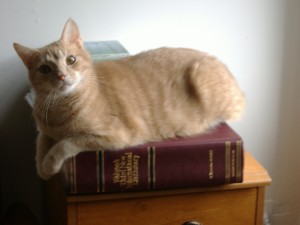
I’ve been meaning to post about the Book Bench‘s whimsical dress-up-your-pet-as-literary-character Critterati contest for several days, but there have been technical difficulties. Namely, my cat, Mr. Oliver Dash Stameshkin-Zook, has proved resistant to dressing up as Dickensian orphan Oliver Twist. Blood was shed; there may even be scars. What there isn’t, sadly, is a photograph of Oliver in a Newsies cap, looking expectantly up at me from an empty food bowl. Please sir, can I have some more? He was willing to show his love for the dictionary, however, so perhaps he prefers The 25th Annual Putnam County Spelling Bee? […]


Shop Talk |

it's okay to be scary…and scared

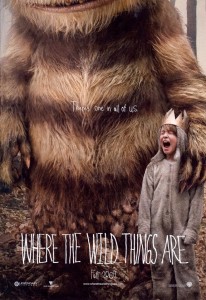
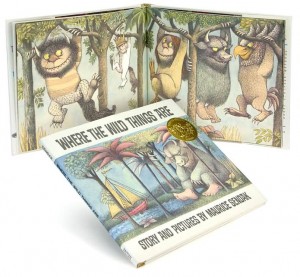
One last take on Where The Wild Things Are: its author, Maurice Sendak, has some advice for parents who think the book is too scary for kids: “I would tell them to go to hell,” Sendak said. And if children can’t handle the story, they should “go home,” he added. “Or wet your pants. Do whatever you like. But it’s not a question that can be answered.” In a bracingly unsentimental interview with Newsweek, Sendak, director Spike Jonze, and screenwriter Dave Eggers discuss why Max’s dinner is “still hot” and not “still warm,” why he believes Disney is bad for […]


Shop Talk |

Less is More

Earlier this year, the New York Times profiled the writing space of novelist Roxana Robinson. Robinson lives on the Upper East Side near Park Avenue and has a study that would seem the ideal lair for a novelist. This room […] combines all the necessities of 21st-century life — computer, printer, fax machine — with immense personality, thanks to dozens of works of art and memorabilia that paint an indelible portrait of Ms. Robinson and the richly textured world she inhabits. Instead, however, she chooses to write “in an 8-by-10 space that faces a tan brick wall and was formerly […]


Shop Talk |

Wild Things Roundup

Maurice Sendak’s picture book Where the Wild Things Are is nearly 50 years old, but the release of Spike Jonze’s film adaptation has sparked a resurgence of critical interpretations of the story. A sampling: On the Oxford University Press blog, philosophy professor Stephen T. Asma ties our love for Where the Wild Things Are to our fascination with other monsters–“zombies, vampires, and serial killers”: As the movie’s trailer reminds us, “Inside all of us is a wild thing.” And in our therapeutic era, we generally accept that it is good and healthy to visit our wild things –to let them […]


Shop Talk |

Boston Book Festival – This Weekend!

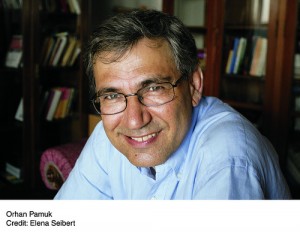
Boston-area FWR readers, check out the Boston Book Festival THIS Saturday, October 24, 10:00 am to 6:00 pm at Copley Square. The festival features readings, lectures, and discussions such as: Keynote speaker Orhan Pamuk “Ties That Bind”: novelists Richard Russo, Michael Thomas, and Elinor Lipman on the family in fiction John Hodgman interviewed by Tom Perrotta “Book Worms and Net Crawlers”: thoughts on “the ubiquitous internet and the explosion of social media” by authors Ben Mezrich and Ethan Gilsdorf and New York Times technology columnist David Pogue. (Read the FWR review of Ethan’s book, Fantasy Freaks and Gaming Geeks, here.) […]