De-kindling
by Celeste Ng
Some books ARE more equal than others. When a publisher changes its mind about publishing a Kindle edition, what happens to the e-book you downloaded? It disappears.

Celeste Ng is the author of the novels Everything I Never Told You (2014) and Little Fires Everywhere (2017). She earned an MFA from the University of Michigan (now the Helen Zell Writers’ Program at the University of Michigan), where she won the Hopwood Award. Her fiction and essays have appeared in One Story, TriQuarterly, Bellevue Literary Review, the Kenyon Review Online, and elsewhere. She is the recipient of the Pushcart Prize, the Massachusetts Book Award, the American Library Association’s Alex Award, and a fellowship from the National Endowment for the Arts. She lives in Cambridge, Massachusetts.
Some books ARE more equal than others. When a publisher changes its mind about publishing a Kindle edition, what happens to the e-book you downloaded? It disappears.
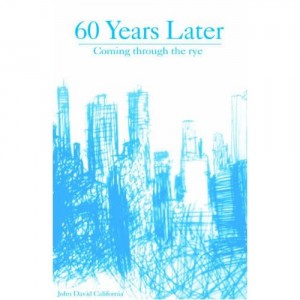
As the Catcher in the Rye lawsuit develops, lawyers and bookworms alike have begun to air their opinions. The Wall Street Journal‘s Law Blog speaks with Marc Reiner, a copyright lawyer, about the issues raised by the lawsuit and whether it has any merits: That issue — whether a fictional character is copyrightable — is a little unsettled. It’s most readily applied to characters that are graphic, like Mickey Mouse, or if the character has been in a series, like Tarzan. I’d probably lean toward thinking that Holden Caulfield is fleshed out well enough to be copyrightable. Some folks think […]
Remember Holden Caulfield? Young, angst-ridden, wandering the streets of New York? In the novel 60 Years Later: Coming Through the Rye, by Fredrik Colting, Holden is seventy-six-year-old “Mr. C,” still angst-ridden and wandering the streets once more. Holden’s sister Phoebe and prep-school roommate Stradlater also make appearances. But does Colting have the right to use these characters–and a fictionalized version of J.D. Salinger himself–in his own work? We’ll see. Salinger is suing Colting, claiming that 60 Years Later is “a rip-off pure and simple.” Colting and his lawyers insists the novel is neither plagiarism nor a sequel to Catcher in […]
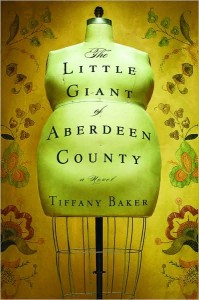
an excerpt: Tiffany Baker’s debut novel, The Little Giant of Aberdeen County, contains an apparent contradiction in its title: a little giant? Truly Plaice, the character so dubbed, is no Paul Bunyan: she doesn’t tower over rooftops or create canyons with her feet. But she’s plenty big enough to cause a stir: at five, she’s two inches taller than her seven-year-old sister, and she just keeps growing bigger and heavier. So she becomes known as Aberdeen’s “little giant,” a position that shapes her fate. And that oxymoron encapsulates this whimsical novel, which is, at its heart, about the yoking together […]
Tiffany Baker’s debut novel, The Little Giant of Aberdeen County, contains an apparent contradiction in its title: a little giant? Truly Plaice, the character so dubbed, is no Paul Bunyan: she doesn’t tower over rooftops or create canyons with her feet. But she’s plenty big enough to cause a stir: at five, she’s two inches taller than her seven-year-old sister, and she just keeps growing bigger and heavier. So she becomes known as Aberdeen’s “little giant,” a position that shapes her fate. And that oxymoron encapsulates this whimsical novel, which is, at its heart, about the yoking together of opposites.

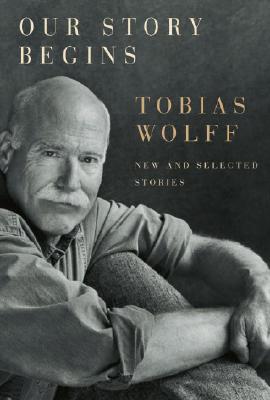
Recently, I was at Grub Street’s Muse and the Marketplace writers’ conference here in Boston, and in one session we looked at Tobias Wolff‘s “Bullet in the Brain.” I was surprised at (1) how many people had not read the story–of a group of 30 people, I was one of maybe 5 who had, and (2) how amazing this story really is. So compressed and so focused: crystalline. Perfect for teaching yourself, or others: you can take it apart, sentence by sentence, and figure out why each word is there and exactly how the story is working. And yet, even […]
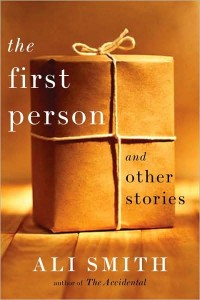
The dozen stories in The First Person, Ali Smith’s latest collection, are deceptively simple: no verbal pyrotechnics, no otherworldly setting, no last-minute epiphanies, and most of the time, no traditional rising action or climax. They’re told in a simple, conversational tone, often by a narrator who could be Ali Smith herself. But they stay with you long after you’ve finished reading them. They sneak up on you, camouflaged as innocuous little anecdotes about innocuous little interactions and misunderstandings, and only later do you realize they’re asking the most fundamental questions that fiction, or life itself, can ask.
Near the beginning of Nathaniel Rich’s debut novel, The Mayor’s Tongue, a young man named Eugene reads a novella by his idol, the legendary author Constance Eakins. “[It] was typical Eakins,” Eugene reflects, “a strange reality that bordered on fantasy, an exotic locale, larger-than-life characters.” He might have been describing The Mayor’s Tongue itself, a book so dizzyingly rich with surprises that no review could—or should—describe them all.

In his chapter on “Detail,” Wood takes on a standby of Fiction I: the telling detail. Details, we’re usually told, should be significant, not gratuitous; they should give us some particular insight into the character or the setting. If there are telling details, Wood suggests, there must be untelling details as well. But do “irrelevant” or “untelling” details really exist?
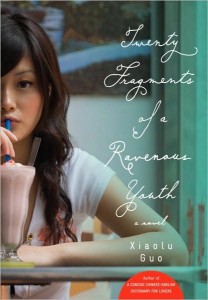
In Twenty Fragments of a Ravenous Youth, the most sharply drawn, most enticing character is contemporary Beijing itself, its “cramped side streets where the walls were like the scales of fish–tall shelves tightly packed with pirated discs.” The city and the promise behind it sparkle in Guo’s descriptions, which are sharp, fresh, and free of clichéd exoticism.