At the Ann Arbor Book Festival, FWR’s Jeremiah Chamberlin talked with acclaimed novelist Colson Whitehead about the process of writing his latest book, Sag Harbor, the art of manufacturing genuine nostalgia, and the duality of veering “between the capricious horribleness of the everyday and the absurd beauty of existence.” Click here to read their conversation.
FWR’s contributors are participating in some very cool programs, and we’re eager to know what other writers are up to over the next few months. Leave a comment here, or email fictionwritersreview@gmail.com to tell us where you’ll be writing, teaching, or otherwise fictionizing. (And check in tomorrow to hear more about the Catskill Studio for Writing.) 1. Natalie Bakopoulos is currently teaching a week-long writing workshop on the Greek island of Andros as a part of the Aegean Arts Circle, which was founded in 2003 by Amalia Melis. Stratis Haviaris, a poet and the founding editor of the Harvard Review, […]
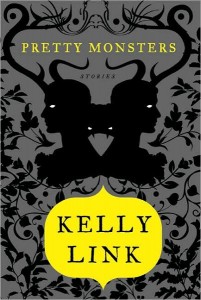
I want my life to be a Kelly Link story. I mean it, even though many of the characters in her stories are a little lost, literally or emotionally, and even though others are in danger. Pretty Monsters is intended to be a young adult collection of short stories. This in itself is new—there aren’t many YA story collections, are there? But even if there are, there is nothing like Kelly Link. It’s useful that a few of the stories in Pretty Monsters are republished from her earlier collections, Magic for Beginners and Stranger Things Happen, because I can’t talk about Kelly Link without talking about the story “Stone Animals,” which first appeared in the Best American Short Stories in 2005, and then in Magic. I still dream about it sometimes. There was a period of almost a year after I first read it when, no matter what else I was reading, I wished it was “Stone Animals.” I’ve read it a dozen times. I sort of want to be reading it right now.
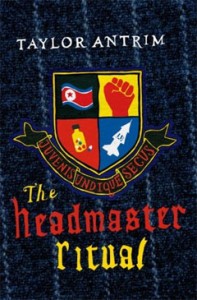
Thanks to Erika/Practicing Writing for alerting FWR to the L.A. Times‘s new “Writers on Writing” feature, which publishes every Friday. This week’s upcoming installment will the the fifth, but there are already some very interesting essays, including a piece by Taylor Antrim on writing the second novel and last week’s essay by Rich Cohen: “Will Facebook kill literature’s ‘leave the past behind’ themes?” Read more about (and excerpts from) Taylor Antrim’s debut novel, The Headmaster Ritual, here, and more about Rich Cohen’s books, The Avengers and Tough Jews, here.
FWR Associate Editor Lee Thomas and I finally met face-to-face at this lovely dinner at Lee’s apartment. Behold her (amazing) homemade lasagna and plum cake! Not pictured: excellent conversation, graphic novel recommendations, and happy plotting for our website’s future.
This nearly week-old David Brooks op-ed is infuriating for many reasons (such as its writer’s blatant scoffing at and outright denial of–despite the current economic disaster–the notion that to run a truly successful company or country, a leader should have the prescience to realize that the world around him or her is always changing, the ability to connect with and understand that world and the people in it, and the imagination and flexibility to adjust to that world’s advancements and its people’s diverse and changing needs), but in the name of this website and our shared passion for fiction, dear […]
a taste: I want my life to be a Kelly Link story. I mean it, even though many of the characters in her stories are a little lost, literally or emotionally, and even though others are in danger. Pretty Monsters is intended to be a young adult collection of short stories. This in itself is new—there aren’t many YA story collections, are there? But even if there are, there is nothing like Kelly Link. It’s useful that a few of the stories in Pretty Monsters are republished from her earlier collections, Magic for Beginners and Stranger Things Happen, because I […]
Mary Stewart Atwell and Alison Espach talk with short fiction guru Lydia Davis about transitioning from inventing worlds to inverting the real one; writing dream stories; and translating Madame Bovary.
Asked about his childhood religious beliefs by an interviewer, Robert Stone once said, “I was in that very difficult position you get in when you really believe in God, and at the same time you are very angry: God is this huge creature who we must know, love, and serve, though actually you feel like you want to kick the son of a bitch.” Throughout his career, Stone has drawn upon this confluence of anger and belief—and the despair that often results—to create some of his most resonant work. At their best, Stone’s portrayals of men and women guided (and […]
Check out this NPR blog post to find out who the “longest running fictional character” (in any medium) is. If you want to guess before clicking, here are Glen Weldon’s criteria: Consistent: Makes regularly scheduled appearances — no yawning gaps between adventures. Continuous: The character’s adventures form a central narrative that builds on what has gone before. (Read: Katzenjammer Kids, I know you’ve been around a long time, but you’re a gag strip, not an ongoing narrative. Thanks for playing, we have some lovely parting gifts.) New: The constant churning out of fresh content, not simply adaptations, retellings or reprints. […]