Posts Tagged ‘writers on writing’

Barry Hannah Gone (1942-2010)

Barry Hannah Gone (1942-2010)

This morning I woke to hear the sad news that Barry Hannah died yesterday afternoon. He was 67, and the apparent cause was a heart attack, according to the Jackson Free Press. Barry had had several bouts with cancer over the last ten years, yet I was still shocked to hear that he was gone. [...]

The People We Know: An Interview with Donald Ray Pollock

The People We Know: An Interview with Donald Ray Pollock

Donald Ray Pollock, author of the 2008 collection Knockemstiff, left high school at seventeen to work at a meatpacking plant. A year later, he landed a union job at the Mead Paper Mill in Chillicothe, where he worked for the next thirty-two years. He didn’t start writing until his forties, and even then he kept his day job—writing mornings, nights, and weekends. Lydia Fitzpatrick and Kate Levin talk with the author about coming to writing late, getting an MFA, and making disreputable characters empathetic.

"Rules" of Writing

“Rules” of Writing

Inspired by Elmore Leonard’s 10 Rules of Writing, the Guardian recently asked several contemporary authors for their own rules of writing. Writers such as Margaret Atwood, Annie Proulx, Jonathan Franzen, Philip Pullman, Zadie Smith, and many others answered the call ((Here’s Part One; and here’s Part Two).
You may have noticed that at [...]

Writing for the Long Haul

Writing for the Long Haul

In the L.A. Times, author Dani Shapiro reflects on the challenges of a writing career–the lost days of “writing in the cold” for years while building a reputation, the recent “blockbuster or bust” mentality, and how emerging writers can persevere in spite of all of this:
I recently had the honor of acting as guest editor [...]

The Shape of Disaster: An Interview with Margaret Lazarus Dean

The Shape of Disaster: An Interview with Margaret Lazarus Dean

Margaret Lazarus Dean’s The Time It Takes to Fall takes place in the early 80’s in Cape Canaveral, a space town, during a time when NASA and shuttle launches were still a part of the American story of success. Jennifer Metsker talks with the author about how the Challenger disaster affected us, the unique ways fiction captures the felt world, writing from the point of view of a child, and why we should allow our characters to misbehave.

Writing the Great American <span style="text-decoration: line-through;">Novel</span> Video Game

Writing the Great American Novel Video Game

For some time I was one of few standing firmly in both camps—writer and gamer, fiction-fiend and pixel-popper. But the innovative nature of Next-Gen gaming, with its leaps in technology and massive install-base, means games have developed new depth–and the future of gaming promises to look a lot more like literature than flight simulators. This is, in many ways, the rise of a new novel. Like its lexicographic predecessor, the pixilated form revels in moral ambiguity, character motivations, conflicts between free will and fate.

[QUOTES & NOTES] Gotta Serve Somebody: Writers and Academic Homes

[QUOTES & NOTES] Gotta Serve Somebody: Writers and Academic Homes

“Everywhere I go, I’m asked if the universities stifle writers. My opinion is that they don’t stifle enough of them.” — Flannery O’Connor

It’s hard to argue with your heroes, though it’s significantly easier after they’ve died. Flannery O’Connor—the first writer I wanted to be—refers in this quote to creative writing workshops, which were just becoming the new standard for writerly apprenticeship when she launched her career. But I don’t have the same issues as she had with the workshop paradigm as it’s now practiced, or with the proliferation of creative writing programs.

This is your brain on fiction

This is your brain on fiction

Can neuroscience help you become a better writer? That’s what YA author Livia Blackburne, a graduate student in neuroscience at MIT, wonders on her blog Narrative and the Brain.
blockquote>…. the scientists used a brain scanner to see what regions lit up during the reading of a story. They watched the brains of volunteers as [...]

Remembering DFW

Remembering DFW

We still miss David Foster Wallace, and we’re not alone.
In GQ, Deborah Treisman (head of the New Yorker’s fiction department) discusses working with the late author:

You’ve edited a lot of great writers—what was the process like with him?
David was wonderful to edit because he was so involved with the minutiae of his work—he had a [...]

The Real Question

The Real Question

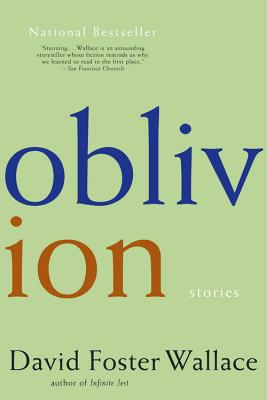
Twice recently, while riding the train, I’ve noticed someone reading David Foster Wallace’s Oblivion, and both times I’ve found myself wondering if– hoping, really–the someone was reading a particular story from that book: “Good Old Neon.”

“Good Old Neon” offers in heartbreaking detail a first-person account of the psychological suffering that leads the apparent narrator, Neal, to suicide. The story begins, “My whole life I’ve been a fraud,” and goes on to unpack the causes and consequences of that statement.