Writer as Athlete – Teacher as Coach
by Valerie Laken
Sometimes all the talent and skill in the world are not enough to get a book written. Valerie Laken makes a case for coaching, not just teaching, young writers.

Sometimes all the talent and skill in the world are not enough to get a book written. Valerie Laken makes a case for coaching, not just teaching, young writers.

As the new academic year revs up and our teaching-focused month winds down, we here at FWR want to take a moment and say a huge THANK YOU to our wonderful summer editorial intern, Nicole Aber. All summer long, Nicole provided invaluable assistance behind the scenes, as well as writing up some excellent posts for the blog (see below). No matter what challenge we threw at her, she handled it with aplomb! This year, Nicole will be Managing News Editor at the Michigan Daily, and we know she’ll be amazing there as well. Dear readers, please join us in thanking […]
I began submitting to Glimmer Train in 1997, the same year I received my undergrad degree in creative writing from the University of Michigan. That fall, following graduation, my now-wife and I moved to a small cabin on a lake in northern Michigan so that I could be “a writer.” I’d thought I needed to live deliberately, like Thoreau, to nurture my creative spirit. But as we’ve often joked since, the experience was more like The Shining–though with a lot less space. One positive during that experience, however, was that a story of mine received an honorable mention from Glimmer […]
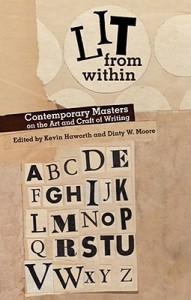
This week’s feature is Lit From Within, edited by Kevin Haworth and Dinty W. Moore. Published this year by Ohio University Press, the book is a multi-genre craft anthology that, in the words of the editors in the introduction to the book, “has its origins in the Ohio University Spring Literary Festival.” They go on to describe the goal of the anthology, saying, “What we have tried to do, in this collection, is to reflect the level of the conversation about poetics and the craft of writing that has taken place over the Lit Fest’s twenty-five-year history.” Contributors include Charles […]
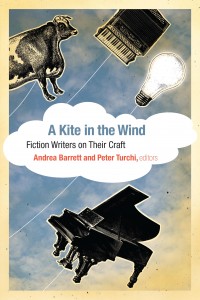
Last week we featured A Kite in the Wind as our Book-of-the-Week title, and we’re pleased to announce the winners. Congratulations to: Danielle Davis (@writesinLA) Danielle Villano (@daniellevillano) Chase Burke (@chasedaway) To claim your signed copy of this novel, please email us at the following address: winners [at] fictionwritersreview.com If you’d like to be eligible for future giveaways, please visit our Twitter Page and “follow” us!

People tell me that I am a poetic writer. My response to this characterization varies from Thanks! to What does that mean? to Yes, my novel did sell like poetry to I want people to love my work in the way that poetry lovers love poetry, desperately and a bit dangerously, gripping the pistol under the pillow with one hand and the childhood stuffed rabbit with the other. But what, really, does this cross-genre accusation imply? It’s meant as praise (I’m fairly certain), but wary praise, as if I’ve stumbled into a neighbor’s backyard party, where I’m welcome as long […]
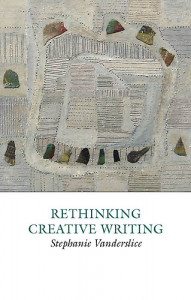
Writer, teacher, administrator, and mom Stephanie Vanderslice explains why she decided to spend a week at the Dairy Hollow Writer’s Colony, and how the space, time, and setting helped her finish another draft of her novel.
How does one teach those phenomenal, force-of-nature fiction writing students who walk into a classroom with their own identities? With the expectation that the teacher will change, too, writes Steven Wingate in his latest Quotes and Notes column.
As part of our teaching theme this month, we’re sharing some of our favorite exercises in our “Get Writing” series for classroom (or personal) use. Enjoy! Last week, Michael Rudin suggested that stealing a first line can help you overcome that new-story inertia. Here’s another larcenous twist: instead of stealing a line, steal a form. For this exercise, write a story in the form of some other piece of writing—a grocery list, an obituary, a set of instructions, liner notes, the back of a cereal box, a help wanted ad, a press release, a weather forecast… The less literary, the […]

When I was an MFA student at the University of Maryland, Stanley Plumly said two things about my poetry that have stuck with me and shaped not only how I think about my writing process but also how I approach teaching creative writing. In one conference, he asked, Will you ever write a ten-syllable line? Stanley Plumly is fond of John Keats’s work, so maybe he did want me to write in ten-syllable lines, but the question was designed to force to me think about formal choices I was making. My initial, silent response was that I was experimenting with […]