The Value of Naïveté: Shishkin’s Maidenhair in Russian and English
by Ian Ross Singleton
“There is an experience it implies, a weary worldliness with which many writers aspire to imbue their characters.”

“There is an experience it implies, a weary worldliness with which many writers aspire to imbue their characters.”

When meaning eludes us, we add and subtract, stack and build, until we’ve mosaicked our way deeper into the mystery.
With some help from his friends, Kevin Haworth explores the complicated and necessary role of desire in fiction.
Back in the 90’s, I was teaching a multi-genre creative writing class at Cape Fear Community College, a name I am not making up. There were almost thirty students, with a wide variety of backgrounds, interests, and abilities. At the time, inexperienced, I was still letting folks workshop whatever they wanted, without any restraints on content or pre-screening by me. I was more giddy cheerleader than true teacher, with vague hopes of leaping onto my desk, Robin-Williams like, and inspiring bemusement and admiration from my young students. All this led to some unusual situations, like the young man who plagiarized […]
Kerry Neville Bakken offers a moving appreciation for her friend and former mentor, Frederick Busch, who passed away in 2006. Norton has just released a posthumous collection of his short fiction, The Stories of Frederick Busch, edited and with an introduction by Elizabeth Strout.
What might the post-postmodern, contemporary Holocaust novel look like, and what should it strive to do?

Is plagiarism really a crime? A moral failure? Forrest Anderson wonders if it might be a necessary step in learning how to write–in uncovering the authentic self.

Debra Spark on what’s funny in fiction–and what’s not. “The humor that works in literary fiction, the humor I like, is female. I mean ‘female’ in a pretty stereotypical way here. I don’t mean that the literary work is by women per se, but that it is relational.”
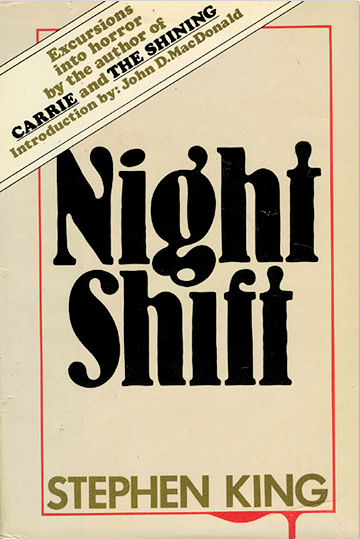
Stephen King’s 1978 Night Shift takes advantage of the “safe” scare, but the story collection’s real artistry is in accessing his reader’s willingness to endure “safe” fear and turning it on the reader himself.
M. Allen Cunningham on the way his fundamentalist evangelical upbringing formed him as a writer, delivering him an awareness of narrative and how story shapes our lives.

We live on the edge of a continent. Our world teeters between land and sea, washed in whimsical coastal weather. Here, cusp is truth. Liminal is how things are, and the World is a story we make up. And tear down. And make up again.
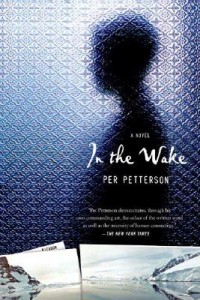
Depicting inarticulate speech patterns in fiction should be easy, right? Somehow, it isn’t—but it’s necessary, because humans are generally an inarticulate bunch.