Suspend Your Disbelief

Shop Talk

join the effort to save Shaman Drum and the GLLAC

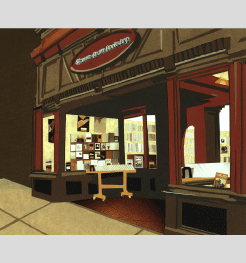
An Open Letter from Julie Ellison The following message was originally posted here and has been making the rounds as an email. Please refer other book lovers and writers, especially those in the Ann Arbor area, to this announcement and the letter it links to. Dear Friends and Colleagues, I am writing to let you know about a collective effort to save Shaman Drum Bookshop, now incorporated as the Great Lakes Literary Arts Center (GLLAC). The statement (click here to download the PDF) explains the reasoning behind a new coalition to preserve Shaman Drum. Those of us involved in this […]

when will they ever learn?

There have been scads of articles about the evils of high-stakes gambling by book publishers–the doling out of huge advances to one or two would-be-blockbusters while investing little in the rest of the list. The logic behind this impulse isn’t hard to understand: when a Big Book hits the jackpot, the publisher does, too–and in theory, the rest of a publisher’s list and personnel would reap the benefits. But even the glorious success of of one book can set unrealistic expectation for future titles–and rather than supplementing resources for less popular books, a Hit might wind up making those books […]


NBCC Awards

The National Book Critics Circle announced 2008’s award winners on Thursday: Fiction: 2666 by Roberto Bolaño, trans. by Natasha Wimmer (FSG) Poetry: Sleeping It Off in Rapid City by August Kleinzahler (FSG) and Half the World in Light by Juan Felipe Herrera (U of Arizona Pr) Criticism: Children’s Literature: A Reader’s History from Aesop to Harry Potter by Seth Lerer (U of Chicago Pr) Biography: The World Is What It Is: The Authorized Biography of V.S. Naipaul by Patrick French (Knopf) Autobiography: My Father’s Paradise: A Son’s Search for His Jewish Past in Kurdish Iraq by Ariel Sabar (Algonquin) Nonfiction: […]


novel as plus-one

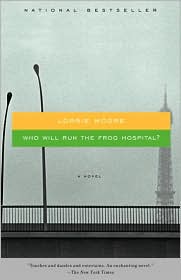
What book would you take out to dinner? For the New York Times, Leanne Shapton asked a dozen authors to share their ideal dining companions. (Thanks, Kathryn, for the link.) Me, I’d treat Who Will Run the Frog Hospital? to La Lunchonette and a musical. It eats brains and knows all the lyrics.


TED talks: writers on writing

Celeste just turned me on to TED — or Technology, Entertainment, Design; on their website, this organization offers videos of more than 200 lectures by VIPs from a wide swath of industries and arts. Here’s a sampling of talks by writers: – Dave Eggers describes his experience working with 826 Valencia, encouraging creative people everywhere to get involved with public schools. – Amy Tan explores “where creativity is hiding.” – Isabel Allende discusses passion, creativity, and definitions of feminism. – Elizabeth Gilbert gives a lecture on “genius” and creativity.


more (and more and more) e-reader and Kindle links

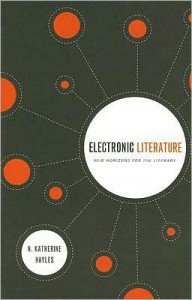
In the latest The Quarterly Conversation, William Patrick Wend’s “Intro to E-Lit: How Electronic Literature Makes Printed Literature Richer” discusses N. Katherine Hayles’ book Electronic Literature: New Horizons for the Literary and defends e-publishing. Slate‘s Farhad Manjoo loves the Kindle but fears it’s bad news for the current publishing industry. Booksquare argues that the text-to-speech verdict, supposedly a win by Authors Guild (who aggressively pursued this issue), might (ironically) benefit Amazon the most in the end. Check out her earlier post on e-book pricing. The latest Kindle news is at Kindlebuzz, and folks are talking about nothing else at KindleBoards.


writing: how much do writers like doing it?

Weighing in on this question for the Guardian are authors A.L. Kennedy, Amit Chaudhuri, Hari Kunzru, John Banville, Will Self, Joyce Carol Oates, Geoff Dyer, Ronan Bennett, and Julie Myerson. I identify most with Hari Kunzru‘s take; yes to the freak-out and self-disgust but also the “spinning words like plates…”: I get great pleasure from writing, but not always, or even usually. Writing a novel is largely an exercise in psychological discipline – trying to balance your project on your chin while negotiating a minefield of depression and freak-out. Beginning is daunting; being in the middle makes you feel like […]


reading on probation

For the NY Times, Leah Price takes a look at Changing Lives Through Literature, “an alternative sentencing program that allows felons and other offenders to choose between going to jail or joining a book club. […] [C]riminals who have been granted probation in exchange for attending, and doing the homework for, six twice-monthly seminars on literature.”


DFW's unfinished novel

This week’s New Yorker has an excellent piece on David Foster Wallace, on his struggles with depression and with writing The Pale King, the unfinished novel he left behind. Wallace’s wife found several thousand pages of the work in progress in their garage after his death. The book (a partial manuscript) will be published posthumously by Little, Brown next year; D.T. Max (writer of the New Yorker piece) describes it as about “a group of employees at an Internal Revenue Service center in Illinois, and how they deal with the tediousness of their work.” Here are some manuscript pages from […]


Andrew's Book Club: March picks

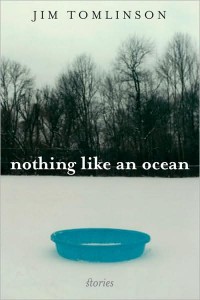
For March, Andrew recommends three collections: 1. from a university press (University Press of Kentucky): Jim Tomlinson’s Nothing Like an Ocean: Eleven stories about life in the rural Kentucky town of Spivey; Tomlinson’s first collection, Things Kept, Things Left Behind, won the Iowa Short Fiction Award. 2. from an independent press (Autumn House): Samuel Ligon’s Drift and Swerve: From the author of the novel Safe in Heaven Dead, this story collection won the 2008 Autumn House Fiction Prize. 3. from a big house (Pantheon): Mary Gaitskill’s Don’t Cry. Gaitskill’s first collection in more than a decade is highly anticipated. Here’s […]