Suspend Your Disbelief

Shop Talk

Joyce, Twitter. Twitter, Joyce.

In honor of Bloomsday, the literary project Ulysses Meets Twitter is conducting an online reading of Joyce’s masterpiece today (@11ysses). Says the project’s website: This is not an attempt to tweet mindlessly the entire contents of Ulysses, word-for-word, 140 characters at a time. That would be dull and impossible. What is proposed here is a recasting or a reimagining of the reading experience of this novel, start to finish, within the confines of a day-long series of tweets from a global volunteer army of Joyce-sodden tweeps. Can you imagine such a thing? Would it be horrific, a train wreck? Or […]


Book-of-the-Week Winners: My American Unhappiness

Last week we featured My American Unhappiness as our Book-of-the-Week title, and we’re pleased to announce the winners. Congratulations to: Editura Litera (@edituralitera) Aubre Andrus (@aubreandrus) Naughti Literati (@NaughtiLiterati) To claim your signed copy of this collection, please email us at the following address: winners [at] fictionwritersreview.com If you’d like to be eligible for future giveaways, please visit our Twitter Page and “follow” us!


On Dog Ears

No, not that kind. For her book Dog Ear, photographer Erica Baum has photographed mass-market paperbacks with their pages folded down so that the text on different pages aligns. (Via.) The results are a kind of mash-up between found poems and origami. The Seattle PI has several of Baum’s images online—take a look!


Shakespeare was a neuroscientist?

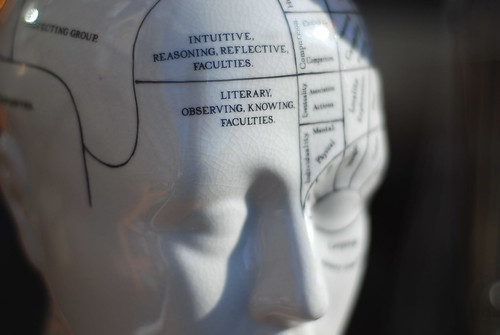
Neurolinguist Philip Davis is studying the effects of Shakespeare on the brain. Big Think has more info: In all of his plays, sonnets and narrative poems, Shakespeare used 17,677 words. Of these, he invented approximately 1,700, or nearly 10 percent. Shakespeare did this by changing the part of speech of words, adding prefixes and suffixes, connecting words together, borrowing from a foreign language, or by simply inventing them, the way a rapper like Snoop Dogg has today. […] [Davis] is studying what he calls “functional shifts” that demonstrate how Shakespeare’s creative mistakes “shift mental pathways and open possibilities” for what […]


BookCrossing: Catch & Release

Remember the movie Amelie, when Audrey Tatou’s takes photos of her father’s garden gnome in all kinds of faraway places? BookCrossing is kind of like that, but for books. Users label copies of their favorite books with special codes and leave them in public places, then log in to see who’s found the book and where the book has traveled around the world. Says the site: Release it into the wild. Referred to as the “wild release” (and loved by so many BookCrossers), this type of sharing is a bit like nudging a baby bird out of the nest or […]


THIS WEEKEND: clmp's Lit Mag Marathon Weekend (NYC)

This weekend, CLMP (The Council of Literary Magazines and Presses) is hosting its 12th annual Lit Mag Marathon Weekend. Here’s the scoop, courtesy of CLMP’s newsletter: The Magathon: Saturday, June 11th, 4-6:30 PM New York Public Library’s DeWitt Wallace Periodical Room, 5th Ave. at 42nd St. In this “marathon” reading, editors of lit journals will present selections from their first issues. The GIANT Lit Mag Fair at Housing Works: Sunday, June 12th, 11-4PM Housing Works Used Book Café, 126 Crosby Street in Soho Lucky you, New Yorkers—you can pick up tons of lit mags for only $2 a copy! Magazines […]


Longlist for Frank O'Connor International Short Story Award announced

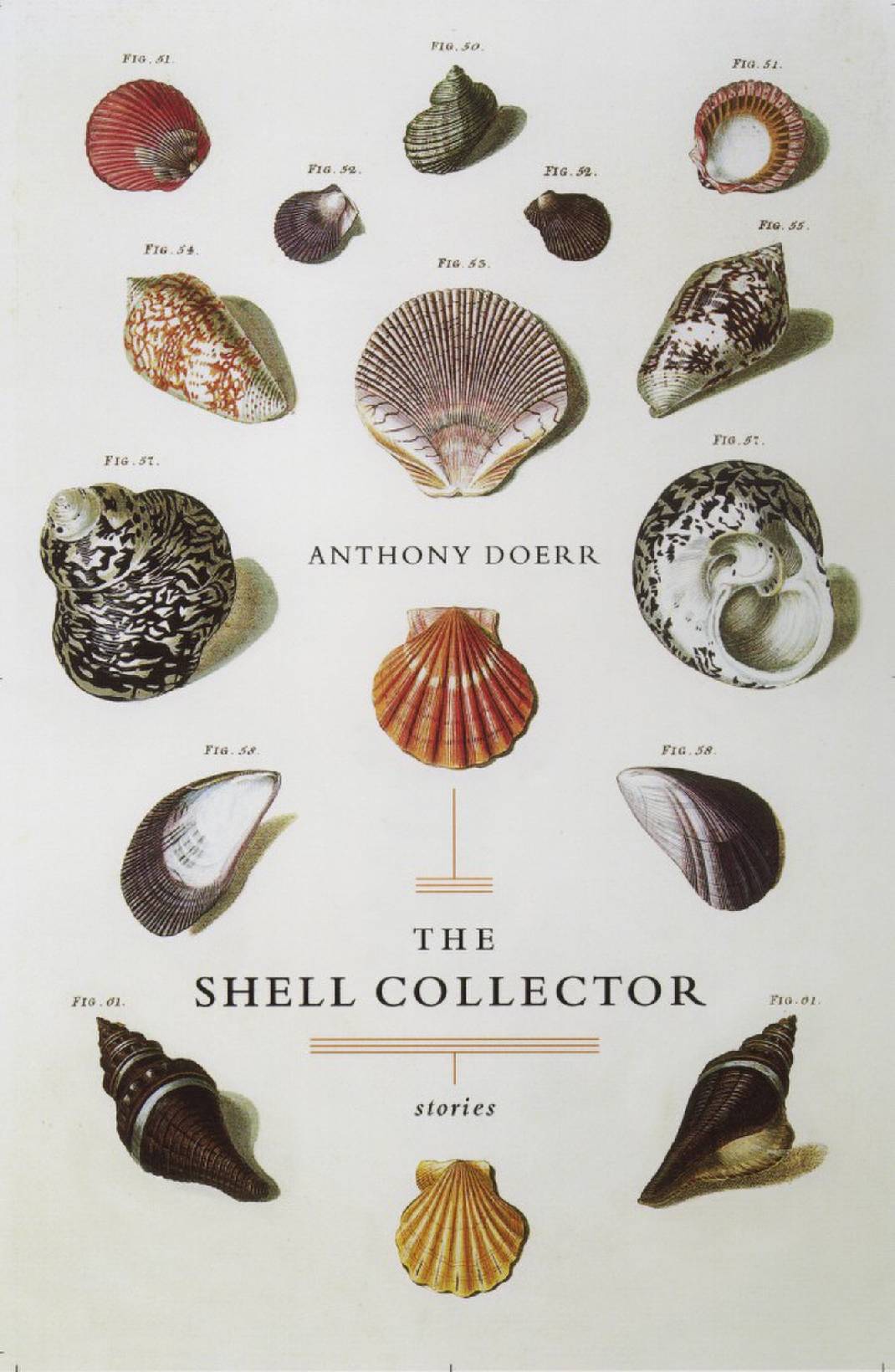
The longlist for the Frank O’Connor International Short Story Award has just come out, and here at FWR, we’re thrilled to have featured many of the writers on it in interviews, reviews, and essays, including: Anthony Doerr, for Memory Wall Danielle Evans, for Before You Suffocate Your Own Fool Self Siobhan Fallon, for You Know When the Men Are Gone Alan Heathcock, for Volt Valerie Laken, for Separate Kingdoms Yiyun Li, for Golden Boy, Emerald Girl Offered by the Munster Literature Centre, the 35,000-euro prize is the largest for a short story collection.  The shortlist will be announced in July.  […]


Lit doing good

It might be made up, but fiction can still do a lot of very practical good in the world Here are three recent examples: 1. Tornado relief: In the wake of the tornadoes that devastated Alabama in April, author Shiloh Walker pledged to make a donation of $1 to United Way for every comment left on her blog post. (Via.) 2. Japan earthquake relief: In collaboration with Japanese editor Motoyuki Shibata, A Public Space has launched Monkey Business: New Voices from Japan, an annual English-language version of Shibata’s Japanese journal Monkey Business. To aid relief efforts for the recent earthquake […]


Journal of the Week subscription winners: American Short Fiction

We’re delighted to announce the winners of our American Short Fiction Journal of the Week giveaway, chosen at random from our Twitter followers. Congratulations to: Stella MacLean (@Stella__MacLean) J.P. Cunningham (@jpcauthor) Rosemary O’Connor (@RosNovelIdeas) You’ll each receive a complimentary one-year subscription to American Short Fiction! Please contact us at winners [at] fictionwritersreview.com with your contact information and we’ll coordinate the rest. If you missed the profile of American Short Fiction and the exclusive interview with Assoiate Editor Callie Collins, you can read the whole thing in our blog archives. And remember: if you’d like to be eligible for future journal […]


Stories We Love: "Map of the City"

Editor’s note: What? Isn’t Short Story Month over? Yes, it is—but that doesn’t mean we stop loving short stories. So here’s an encore round of “Stories We Love.” In “Map of the City,” a story from her new collection Separate Kingdoms, Valerie Laken portrays the life of an American college student in perostroika-era Moscow. The story is brilliantly structured—the names of Moscow metro stations head the various sections, each of which captures a new moment in time and space and thereby mimics the experience of using the subway: you descend into one station and resurface at another. Perestroika, after all, […]


Book of the Week: My American Unhappiness, by Dean Bakopoulos

This week’s featured title is My American Unhappiness, by Dean Bakopoulos. Bakopoulos was born and raised in metro Detroit, which is the setting of his first novel, Please Don’t Come Back from the Moon (Harcourt, 2005), a New York Times Notable Book. He has lectured at Michigan, Cornell, UW-Madison, and other universities about the economic and environmental problems facing the post-industrial Rust Belt, and has published related essays and criticism in The New York Times Book Review, The Los Angeles Times, The Miami Herald, The Progressive, The Believer, and Real Simple. His one-act plays “Phonies” and “Wayside” have been produced […]


Plotting out "Plot"

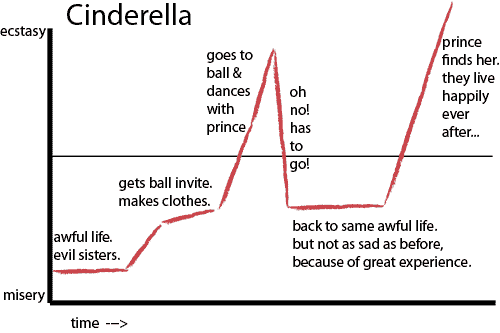
How can graphs and charts help you with your writing? Blogger Derek Sivers shares these story grids from Kurt Vonnegut to help you visualize the plot of your story. (via.) Here’s one of the story of Cinderella: And if nothing else, a graph might put things in perspective. Witness blogger Ed Yong’s graph of what the writing process feels like (via). He’s a science writer, but this could apply just as well to fiction writing: My favorite point, and one I’ve been at all too often: “Regurgitated a plate of idea spaghetti. I’ll never extract a single strand from this. […]