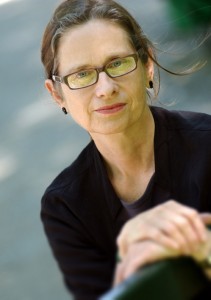
Mary Stewart Atwell and Alison Espach talk with short fiction guru Lydia Davis about transitioning from inventing worlds to inverting the real one; writing dream stories; and translating Madame Bovary. To read the interview, “Little Plots of Real Life,” click here.
Earlier this month Waccamaw launched its Spring 2009 Issue. This is the third volume of the online literary journal published at Coastal Carolina University. The mission of the journal is to combine the rigorous quality and attention to detail of print journals with the reach and distribution of the Internet. And this attention to detail is visible not only in the quality of the authors being published here, but also little things like font choices (Georgia) and the off-white background that gives the illusion of reading from a “page.” The journal even has an ISSN (International Standard Serial Number) and […]
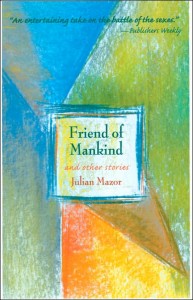
Julian Mazor’s wonderful, unsung second collection of stories, Friend of Mankind published in 2004, thirty-six years after his first. Mazor’s elegant language evokes settings that are simultaneously a backdrop for and a mirror of his characters’ inner lives, and his compassion for these characters is almost physical. Click here to read the full review by Helen Mallon.
Julian Mazor’s wonderful, unsung second collection of stories, Friend of Mankind, published in 2004, thirty-six years after his first. Mazor’s elegant language evokes settings that are simultaneously a backdrop for and a mirror of his characters’ inner lives, and his compassion for these characters is almost physical.
I’ll be on a plane to San Francisco, but if you’ll be in NYC tonight, head to BAR on A – 170 Avenue A @ 11th – at 7:30 PM to see FWR contributor and fictiontastic writer Lee Goldberg read with Meakin Armstrong and Deenah Vollmeras part of the Guerrilla Lit Reading Series. From anywhere, you can follow Guerrilla Lit on Twitter: http://twitter.com/guerrillalit. About the Writers* Lee Goldberg teaches Literature and Composition at LaGuardia Community College. He has an MFA from New School University and is a founding member of the Guerrilla Lit Reading Series. He is currently working on […]
There’s an old adage in these parts: If you don’t like the weather in Michigan, wait five minutes. This was certainly true to form the last several days here at the Ann Arbor Book Festival. Friday dawned beautiful, cloudless and warm. Yet by the cocktail hour the sky was spitting and sputtering. Saturday, too, threatened rain. But other than a few windy gusts that lifted the tents on the Ingalls Mall, the weather held. In fact, by mid afternoon that second day the clouds had gone. And the only rain we received was through the night—the literary Gods were smiling. […]
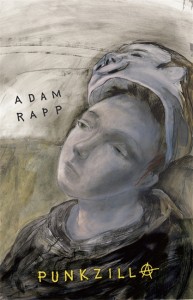
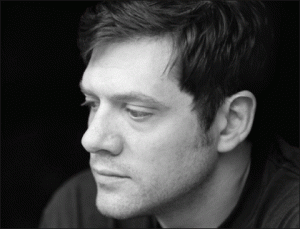
Brian Bartels sits down with Adam Rapp–prolific playwright, musician, director, and novelist–to talk about his latest book, Punkzilla, and the mysterious process by which the words we create are shaped by music. Click here to read the whole interview-essay, “Shadow Sounds: Music as Character.”
Brian Bartels sits down with Adam Rapp–prolific playwright, musician, director, and novelist–to talk about his latest book, Punkzilla, and the mysterious process by which the words we create are shaped by music.
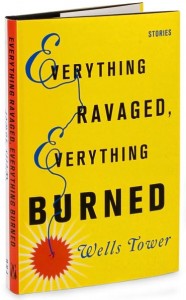
The first things you feel are joy and awe. The stories in Everything Ravaged, Everything Burned, Wells Tower’s first collection, are pieces that care, first and last, about telling a damn good story. Tower’s use of compression and summary to contextualize poignant or dramatic scenes is elegant and efficient. The granular and hilarious detailing of landscapes—North Carolina’s landscapes, in particular, are exuberantly and beautifully rendered in this collection—and of characters is solid, remarkable. The virtuosic moments in Tower’s prose make us gape, wince, laugh out loud: the hilarious or heart-rending one-liners, the hard-eyed endings, the way in which objects are imbued with astonishing, imagined inner lives of their own. But these stories are also relentlessly cynical.
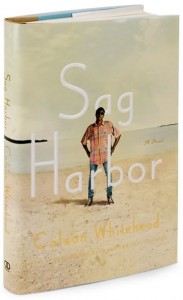
Colson Whitehead’s fourth novel, Sag Harbor, is driven not by plot but by time, by the fleetingness of summer and its constant reminder of that fleetingness. The beginning is slow, with the sense of months ahead, time to digress and ponder and imagine and internalize, with the thickest, most dense prose socked in the middle of July, the more desperate, urgent bursts as we careen toward Labor Day. The writing is wonderfully languorous throughout, like summer itself, and a perfect match for adolescence: unrestrained and indulgent but wonderfully self-conscious as well.