Suspend Your Disbelief

Author Archive

Shop Talk |

How Fiction Works Discussion Review: Fiction and Social Change

Fiction can change the world. Now that I’ve dropped that lead balloon on my foot, allow me to leave it there temporarily as penance for not only opening with such a clichéd adage, but also a self-aggrandizing one. Worse yet, I believe it. Deeply. Despite how hackneyed a statement, fiction has the potential to change our world. Perhaps not always in the same way as clean drinking water or penicillin, but alter our lives it can. And powerfully so. James Wood touches on this phenomenon in his essay-chapter “Sympathy and Complexity.” He opens with an anecdote about a Mexican police […]


Shop Talk |

How Fiction Works Discussion Review: "Realism" in Fiction

The chapter/essay of How Fiction Works I found most intriguing was the last one: “Truth, Convention, and Realism”; the issues touched on within could easily be the subject of an entire book. What I find the most perplexing is coming to a definition of “realism” in the first place. Is realism truth? Mimesis? Traditional narration? Wood begins the section by citing the novelist Rick Moody, who says that contemporary literature has become dull and needs “a kick in the ass”; his disapproval seems to be aimed more at structure and style than content. Yes, sometimes a novel’s conflict-climax-resolution check mark […]


Shop Talk |

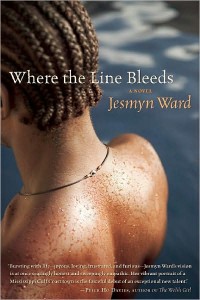
Jesmyn Ward reads *tonight* in Brooklyn – 8 PM @ BAM Cafe!

I’m excited to hear Jesmyn Ward read from her beautiful debut novel Where the Line Bleeds. Her reading tonight is part of “Rear Windows,” a BAM Cafe event presented in partnership with A Public Space. This last installment of the Between the Lines series also features a reading by Ian Chillag, films by Félix Dufour-Laperrière and Eva Weber, and a multimedia performance by Dark Hand and Lamplight. Go here for directions and more information.


Shop Talk |

How Fiction Works Discussion Review: Telling vs. Untelling Details

In his chapter on “Detail,” Wood takes on a standby of Fiction I: the telling detail. Details, we’re usually told, should be significant, not gratuitous; they should give us some particular insight into the character or the setting. If there are telling details, Wood suggests, there must be untelling details as well. But do “irrelevant” or “untelling” details really exist?


Shop Talk |

How Fiction Works Discussion Review: An Introduction

Over the next week, I will join fellow FWR contributors Greg Schutz, Celeste Ng, Natalie Bakopoulos, and Jeremiah Chamberlin in discussing critic James Wood’s latest collection of essays, How Fiction Works. Feel free to join the conversation by commenting on our blog posts. In How Fiction Works, Wood approaches the elusive how behind craft by “ask[ing] a critic’s questions and offer[ing] a writer’s answers.” He explores such mysteries as the distinction between narrative and authorial language in order, in his own words, “to reconnect that technique to the world, as Ruskin wanted to connect Tintoretto’s work to how we look […]


Shop Talk |

Le Clézio's Nobel Lecture: "In the Forest of Paradoxes"

In his wonderful Nobel lecture, Jean-Marie Gustave Le Clézio argues passionately why the writer, literature, and literacy matter in a global society, responding in particular to Stig Dagerman’s Essäer och texter. I greatly admire how this speech–like the best fiction–is at once intimate and inclusive, intensely personal yet widely relevant. Some choice excerpts: If we are writing, it means that we are not acting. That we find ourselves in difficulty when we are faced with reality, and so we have chosen another way to react, another way to communicate, a certain distance, a time for reflection. The writer, the poet, […]


Shop Talk |

Kodi Scheer wins Dzanc Prize

Non-profit publisher Dzanc awards this annual $5,000 prize based on (1) the quality of a writer’s work and (2) a proposal to undertake a specific community service project. This year’s winner, Kodi Scheer, will lead three 10-week writing workshops for patients, caregivers, and staff at the Comprehensive Cancer Center at U-Mich’s hospital. A recent graduate of the Michigan MFA program, Scheer was the recipient of the 2008 Creative Writing Prize for outstanding MFA thesis, and her stories have appeared in Bellevue Literary Review and Quarterly West. She is writing a story collection with the working title Gross Anatomy. To read […]