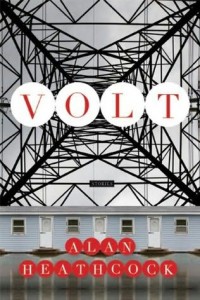
Tyler McMahon loves short stories but worries that collections might be the worst thing to have happened to the genre. However, books like Alan Heathcock’s Volt renew his faith in the collection as an art form of its own, one that makes its stories inseparable from one another—greater even than the sum of their parts.

Think book designers are namby-pamby design nerds hunched over their Macs? Think again. The Guardian reveals the secret, extreme lengths designers will go to in order to get that perfect cover: Deputy art director Glenn O’Neill tells me that the original jacket concept for Robert Harris’s Cicero novel, Lustrum, was to feature an image of a raging fire. Not content with plucking any old flame image from a picture library, however, the team set a field in Gloucestershire on fire. (No, it wasn’t arson – they had the farm owner’s permission). “We created a big bonfire from old crates and […]
How did Shakespeare become so great? Economically speaking, it all had to do with market economies—at least according to the New York Times: Those who paid could enter and see the play; those who didn’t, couldn’t. By the time Shakespeare turned to writing, these “cultural paywalls” were abundant in London: workers holding moneyboxes (bearing the distinctive knobs found by the archaeologists) stood at the entrances of a growing number of outdoor playhouses, collecting a penny for admission. At day’s end, actors and theater owners smashed open the earthenware moneyboxes and divided the daily take. From those proceeds dramatists were paid […]
Each week Fiction Writers Review gives away several free copies of a featured novel or story collection as part of our Book-of-the-Week program. Last week we featured Michael David Lukas’s debut novel The Oracle of Stamboul, and we’re pleased to announce the winners: Robinson Stowell, Mary Westbrook, and Suzanne Hebert. Congratulations! Each will receive a signed copy of this novel. This week we’re pleased to feature Alan Heathcock’s debut collection Volt (Graywolf, 2011). Stories in this book have appeared in such places as Zoetrope: All-Story, Kenyon Review, Virginia Quarterly Review, Storyville, and The Harvard Review. His work has also received […]
Mary Roach is my favorite nonfiction writer—partly because she’s wickedly funny, and partly because we share the same fascinated appreciation for the absurd. I’ve been a huge fan since her first book, Stiff, which is about the various uses of human cadavers. In it and all her other books (Spook, about science and the afterlife; Bonk, about science and sex; and Packing For Mars, about manned space exploration), Roach unearths details that are just too crazy to make up—such as the fact that a dead pope is struck on the forehead with a special hammer to be sure he’s really […]
It’s an end table. No! It’s a lampshade. No! It’s… Today at Fiction Writers Review, we present you with three more things your book can do. 1. Books as handbags Craft podcast Curbly presents step-by-step instructions for turning your favorite tome into a purse. For the gentlemen, perhaps a large volume, like an atlas, could be used to make a stylish attache? 2. Kindle cover Love your Kindle, but want to maintain street cred with the paper-book-loving crowd? Instructables shows how to craft a Kindle cover from an old hardback. Now you can enjoy the hi-tech benefits of an e-reader […]

Despite the boycott, Preeta Samarasan travels to Sri Lanka for the Galle Literary Festival and finds friends, eager young writers, and a love for a country that reminds her powerfully of her native Malaysia. She reflects on the power of free speech in a country recovering from many years of civil war.

A few weeks back, Michael sent me a pretty sweet list of “Words That Don’t Exist in English” from Matt Griswold’s blog. They include: Waldeinsamkeit (German): The feeling of being alone in the woods. Esprit de l’escalier (French): The feeling you get after leaving a conversation, when you think of all the things you should have said. Literally translated: “the spirit of the staircase.” Laced with Love has a round-up of words that don’t exist in English as well#151;some overlap, but one I particularly enjoyed was: Tingo (Pascuense language of Easter Island): To borrow objects one by one from a […]

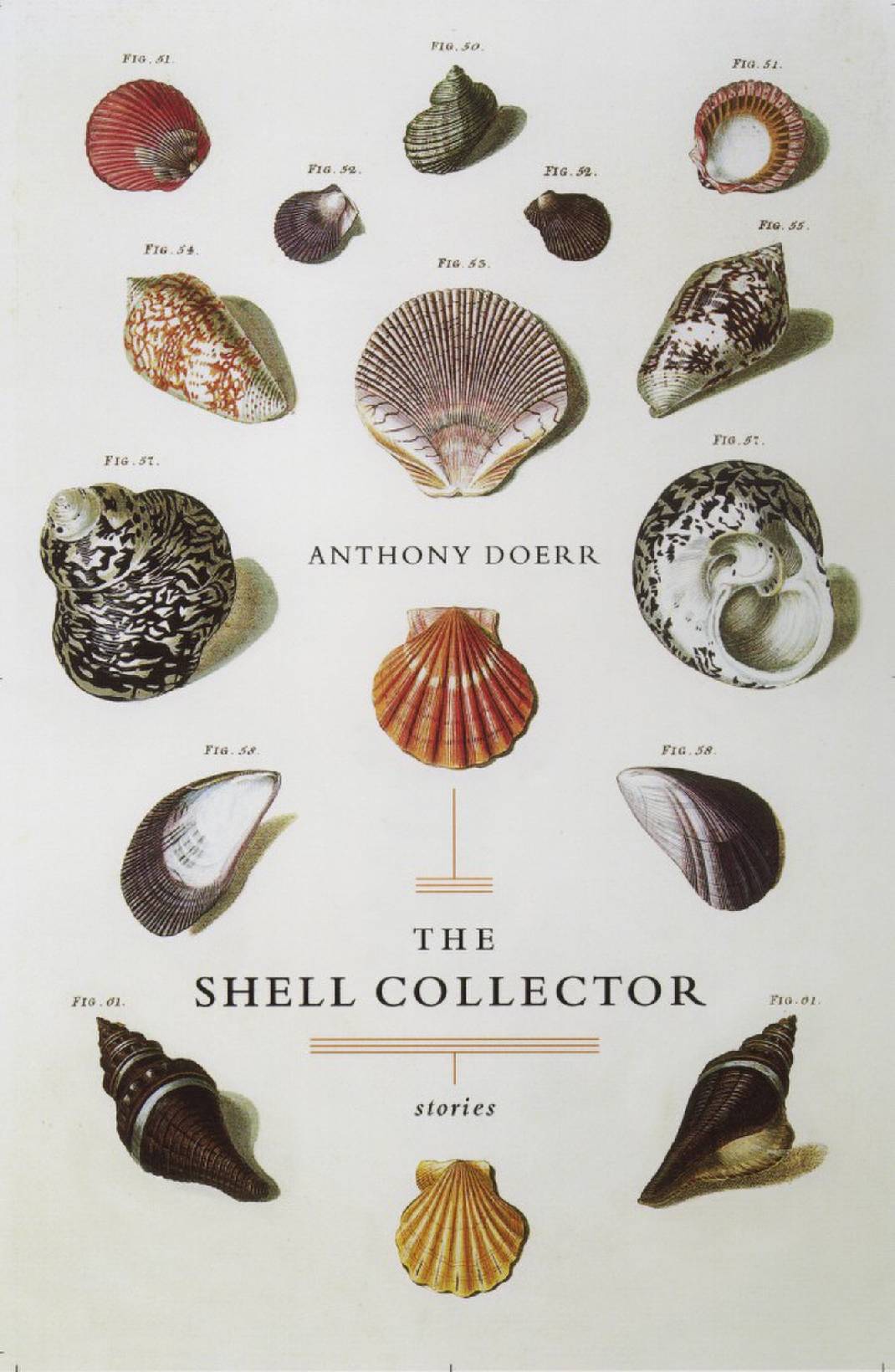
On Wednesday, Anthony Doerr was awarded the 2010 Story Prize for his collection Memory Wall. The ceremony also honored two finalists, Yiyun Li and Suzanne Rivecca. Reports the Story Prize’s blog: Anthony Doerr, for instance, in answer to a question about the preponderance of older women in Memory Wall, talked about how his grandmother, who had Alzheimer’s disease, came to live with his family when he was in high school and how, in his teenage self-absorption, he had been somewhat oblivious to her condition. Yiyun Li discussed how her characters stubbornly resist being swept along by the tide of history—even […]