Suspend Your Disbelief

Recent Posts

Shop Talk |

Does the brain like e-books?

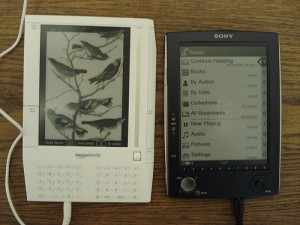
The rise of the Kindle, and the recent advent of competitor e-readers the QUE, the Nook, and the Alex, have sparked much discussion about the future of paper books, publishing, and the universe. But there’s been little discussion about whether e-books are really a good substitute for, you know, book books. The New York Times‘s “Room for Debate” column asked several experts to weigh in: Is there a difference in the way the brain takes in or absorbs information when it is presented electronically versus on paper? Does the reading experience change, from retention to comprehension, depending on the medium? […]
Shop Talk |

Whiting Writers' Awards

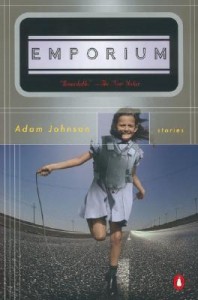
Warm congratulations to 2009’s Whiting Award winners for poetry, fiction, and plays! These are the winners in fiction (click here for a full list of recipients): – Adam Johnson: Emporium (Viking 2002), Parasites Like Us (Viking, 2003) – Nami Mun: Miles from Nowhere (Riverhead 2009) – Salvatore Scibona: The End (Graywolf 2008) – Vu Tran: as-yet-untitled first novel is forthcoming (W.W. Norton) In addition to the honor of receiving such a prestigious award, and the chance to be introduced by keynote speaker Margaret Atwood, these writers also received a substantial monetary prize: at $50,000, the Whiting is one of the […]


Essays |

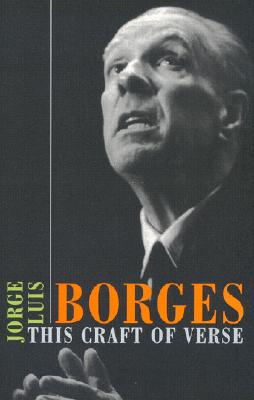
Magic and Music Steer this Vessel: On Jorge Luis Borges’s This Craft of Verse

In This Craft of Verse, Jorge Luis Borges’s collected Norton Lectures, Borges diverges–with sparkling erudition–from conventional forms, offering lectures that are not arguments, but gentle provocations. Remarkably, these visionary pieces were composed at a time when Borges was nearly blind. By this time, as editor Calin-Andrei Mihailescu writes in the book’s postscript, Borges could see “nothing more than an amorphous field of yellow.” We quickly learn, however, that his mind’s eye was as sharp and discerning as ever.


Shop Talk |

NaNoWriMo: FWR FTW!

For a few Novembers now, I’ve been dimly aware that a few thousand people around the world were doing some weird writing thing during one of the busiest months of the year. NaNoWriMo: National Novel Writing Month. 50,000 words — a whole novel — in one month. No editing, no going back, no working on previous projects. Quantity over quality. Revise later. That’s crazy, I thought. Who would do that? Then I came up with 10,000 reasons not to do it, including but not limited to my travel schedule in November, my schoolwork, my job, my boyfriend, my family, my […]


Shop Talk |

The Rise of "Universal Authorship"

Ever had the feeling that everyone is writing a book these days? Maybe it’s true. In SEED magazine, NYU psychology professor Denis G. Pelli and MacArthur “Genius” Charles Bigelow discuss the rise of “universal authorship”: We found that the number of published authors per year increased nearly tenfold every century for six centuries. By 2000, there were 1 million book authors per year. One million authors is a lot, but they are only a tiny fraction, 0.01 percent, of the nearly 7 billion people on Earth. Since 1400, book authorship has grown nearly tenfold in each century. Currently, authorship, including […]


Shop Talk |

Why Slow Thinking (and Slow Writing) Can Be Good for You

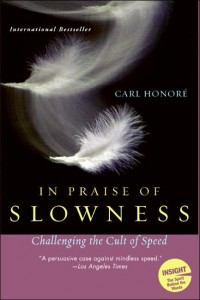
A while back, Anne blogged about J. Robert Lennon and the argument that writers are really working all the time. Here’s further reason to back away from the writing schedule and cut yourself some slack now and then. Carl Honore, author of In Praise of Slowness, makes a compelling case for “slow thinking” when it comes to finding new ideas: […] Slow Thinking is intuitive, woolly and creative. It is what we do when the pressure is off, and there is time to let ideas simmer on the back burner. It yields rich, nuanced insights and sometimes surprising breakthroughs. Research […]


Shop Talk |

"She calls us all by our last names."

Alexander Chee, on Annie Dillard: In my clearest memory of her, it’s spring, and she is walking towards me, smiling, her lipstick looking neatly cut around her smile. I never ask her why she’s smiling—for all I know, she’s laughing at me as I stand smoking in front of the building where we’ll have class. She’s Annie Dillard, and I am her writing student, a 21-year-old cliché—black clothes, deliberately mussed hair, cigarettes, dark but poppy music on my Walkman. I’m pretty sure she thinks I’m funny. She walks to class because she lives a few blocks from our classroom building […]


Shop Talk |

the writer as conversationalist

Are you “smarter in print than in person?” (I’m raising my hand.) And are you behind in your reading? (That’s me. Again.) In the Sept. 27 NY Times Sunday Book Review, Arthur Krystal investigates why good writers aren’t necessarily great conversationalists. Should we blame the antisocial demands of our work? Or do our mouths stammer because they’re out of practice — because our brains are used to the pace of writing (not to mention its magical editing function)? Or while our mouths make words, are our brains secretly elsewhere, still working on something? Or are they dormant, resting? Do our […]


Interviews |

Those Magic Carbons: A Conversation with Eileen Pollack

Brian Short talks to fiction guru Eileen Pollack about the juggling act of writing fiction, teaching writing, and directing the Creative Writing MFA program at the University of Michigan. Her advice to writers: Be bold.

“The first thing I love, when I read, is the language. I can’t read anything where I don’t like the voice. What else do I like? I like plot, I like setting, I like humor, I like boldness. I think part of it has to do with being female. No one ever told Philip Roth to be more timid or nice, to have nicer characters or less sex, to not be as broad. And when a woman tests boundaries, it’s seen as unbecoming. We’re supposed to write these quiet, domestic stories or novels. I’ve just never been one to do that.”


Shop Talk |

A book a day

According to Goodreads, which I keep more or less up to date, I have read 31 new books so far in 2009. This does not include the substantial amount of re-reading I do, but it seems like a reasonable number to me–almost three new books a month. However, this New York Times article (much like this L.A. Times piece, which Anne blogged about in January) makes me feel a bit inadequate. Nina Sankovitch, a Harvard-educated former environmental lawyer, has made a project out of reading one book a day for an entire year. Lest you think she’s taking the easy […]