Quantcast

Posts Tagged ‘Natalie Bakopoulos’

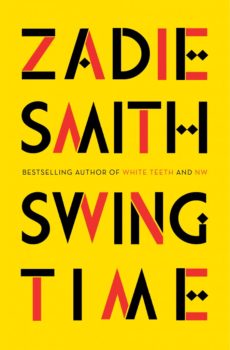
<em>NW</em> by Zadie Smith

NW by Zadie Smith

In her latest novel, Zadie Smith challenges the very notion of what we talk about when we talk about realism.

Book-of-the-Week Winners: <em>The Green Shore</em>

Book-of-the-Week Winners: The Green Shore

For the last two weeks we’ve been featuring Natalie Bakopoulos’s debut novel The Green Shore, and we’re pleased to announce the winners:

John Yunker (@TouristTrail)
Jennifer Solheim (@JenniferSolheim)
Nona Sebastian (@cNonaSebastian)

Congrats! To claim your free copy, please email us at the following address:
winners [at] fictionwritersreview.com
If you’d like to be eligible for future giveaways, please visit our Twitter Page [...]

Book of the Week: <em>The Green Shore</em>, by Natalie Bakopoulos

Book of the Week: The Green Shore, by Natalie Bakopoulos

This week’s feature is Contributing Editor Natalie Bakopoulos’s debut novel, The Green Shore (Simon & Schuster), which releases today. Set in Athens and Paris during the military dictatorship of Greece (1967-1974), the book traces one family’s experience of love and resistance as they negotiate the rule of the Colonels and the fallout from the junta. [...]

Private Freedom, Public Limits: An Interview with Natalie Bakopoulos

Private Freedom, Public Limits: An Interview with Natalie Bakopoulos

Natalie Bakopoulos, author of the debut novel The Green Shore talks about domesticity in the face of fear, the importance of what you don’t see, the fighting spirit of art, and a marriage proposal in a taxi.

We're in love. It's complicated.

We’re in love. It’s complicated.

Marriage is so last century. Natalie Bakopoulos contemplates the demise of the marriage plot and Jeffrey Eugenides’s complex, undermining revival of it in his aptly-titled novel, The Marriage Plot. Is love still the ultimate trump card? Dear reader, it is. With some qualifications.

Stories We Love: "Map of the City"

Stories We Love: “Map of the City”

Editor’s note: What? Isn’t Short Story Month over? Yes, it is—but that doesn’t mean we stop loving short stories. So here’s an encore round of “Stories We Love.”

In “Map of the City,” a story from her new collection Separate Kingdoms, Valerie Laken portrays the life of an American college student in perostroika-era [...]

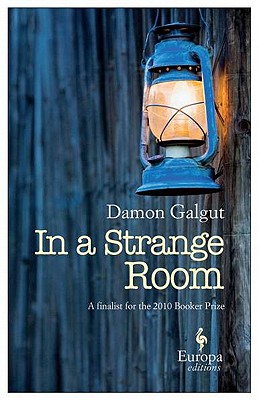
<em>In a Strange Room</em>, by Damon Galgut

In a Strange Room, by Damon Galgut

In a Strange Room ­­chronicles Damon’s travels as he journeys from Greece, to various countries in Africa, to India. Traveling, in general, disorients. We are displaced from our normal locations, we are observing places that are not our own, and our minds constantly compare the new, foreign place with the familiar one. Like Rimbaud’s process of becoming a seer, the state of traveling might be a process by which we project toward the unknown by a derangement of the senses. To travel is to step into a sort of duality.
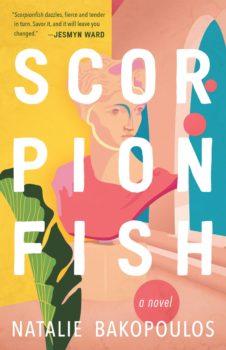
Natalie Bakopoulos wins an O'Henry for "Fresco, Byzantine"!

Natalie Bakopoulos wins an O’Henry for “Fresco, Byzantine”!

Warm congratulations to FWR contributor Natalie Bakopoulos, whose story “Fresco, Byzantine,” was just selected for an O’Henry Prize! The story was published by Tin House in their fall 2008 Political Future Issue and will appear in the O’Henry Prize Stories 2010 anthology next year.

<em>Sag Harbor</em>, by Colson Whitehead

Sag Harbor, by Colson Whitehead

Colson Whitehead’s fourth novel, Sag Harbor, is driven not by plot but by time, by the fleetingness of summer and its constant reminder of that fleetingness. The beginning is slow, with the sense of months ahead, time to digress and ponder and imagine and internalize, with the thickest, most dense prose socked in the middle of July, the more desperate, urgent bursts as we careen toward Labor Day. The writing is wonderfully languorous throughout, like summer itself, and a perfect match for adolescence: unrestrained and indulgent but wonderfully self-conscious as well.

new review on FWR: <em>Sag Harbor</em> by Colson Whitehead

new review on FWR: Sag Harbor by Colson Whitehead

a preview:
Colson Whitehead’s fourth novel, Sag Harbor, is driven not by plot but by time, by the fleetingness of summer and its constant reminder of that fleetingness. The beginning is slow, with the sense of months ahead, time to digress and ponder and imagine and internalize, with the thickest, most dense prose socked in the [...]