
Suspend Your Disbelief

Archive for 2009

Shop Talk |

reader recommendation: poet Denise Duhamel

Dustin Brookshire wrote in to recommend two books by Denise Duhamel, Kinky (Orchises Press, 1997) and Ka-Ching! (Pittsburgh, 2009). Her other titles include Two and Two (Pittsburgh, 2005)–winner of Binghamton University’s Milt Kessler Book Award, Mille et un Sentiments (Firewheel, 2005), Queen for a Day: Selected and New Poems (Pittsburgh, 2001), and The Star-Spangled Banner (Southern Illinois UP, 1999). Here’s Dustin on why he recommends this poet’s work: Denise Duhamel can make you laugh, cry, think, and want to grab a pen to write, and she can do it all within a single poem. Yes, she is that talented! Kumin, […]

Essays |

Deconstructing a Good Cry

I’m a college writing teacher. Creative writing, to be exact. And yes, sometimes it seems as if paper goods companies ought to be lining up with the textbook publishers to wine and dine us at our conferences–or at least paying for our tote bags. Because while there may be no crying in baseball, the writing classroom is a different story.


Shop Talk |

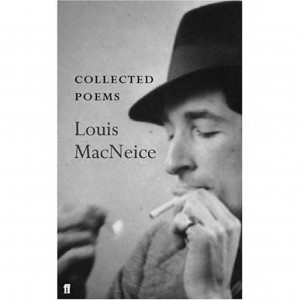
Louis MacNeice, "Snow"

A number of poets have promised to send us recommendations very soon; in the meantime, I’ll share one of my own favorite poems: Snow [by Louis MacNeice] The room was suddenly rich and the great bay-window was Spawning snow and pink roses against it Soundlessly collateral and incompatible: World is suddener than we fancy it. World is crazier and more of it than we think, Incorrigibly plural. I peel and portion A tangerine and spit the pips and feel The drunkenness of things being various. And the fire flames with a bubbling sound for world Is more spiteful and gay […]


Shop Talk |

Passover: "Truth in Storytelling"

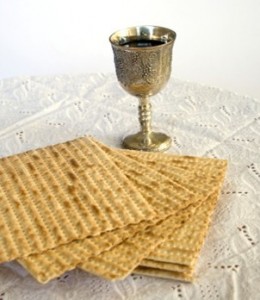
Happy Pesach from FWR! I was planning to link to some Passover-themed short stories or poems, but it turns out they’re in short supply, at least in free textual online form. My own favorite ode to the holiday is William Finn’s song “Passover” from his heartbreaking song cycle Elegies. Like many of Finn’s songs, it packs the emotional punch and narrative depth of a short story into three minutes. Instead of a story or song, I offer this excerpt from Rabbi Stephen Julius Stein’s 2008 essay “Truth in Storytelling”, from JewishJournal.com. This follows a discussion of some contradicting stories — […]


Shop Talk |

QueryFail Day

I’m going to cave one of these days and join Twitter (rather than merely blogging about it), if just to listen in on the next QueryFail Day. Last month, a number of agents designated March 5th the first QueryFail Day, a 24-hour period devoted to Twittering 140-character summaries of the worst queries they’d recently received. The one ground rule was that no querying author could be referred to by name or any other identifying characteristic. That aside, the gloves came off! Did the day serve more to mock would-be authors (as “Positivity Week” agent Nathan Bransford claims) or to educate […]


Shop Talk |

Araby: a chamber musical adaptation of Joyce's Dubliners

I’ll be attending this production on Friday; Joyce fans, look for my adaptation review on FWR–or better yet, join me for the show. You can read the short story “Araby” online here, and below is information from Dixon Place‘s press release about the chamber musical: THE *NEW* DIXON PLACE PROUDLY PRESENTS In the tradition of Jacques Brel, Dixon Place presents a groundbreaking musical theater experience: the staging of composer Chris Rael’s Araby. ARABY By Chris Rael ALL SHOWS ARE LOCATED at The New Dixon Place 161 Chrystie Street (b/w Rivington & Delancey) New York, NY 10002 212-219-0736, www.dixonplace.org Wednesdays-Saturdays, April […]


Shop Talk |

reader recommendation: poet Annemarie Austin

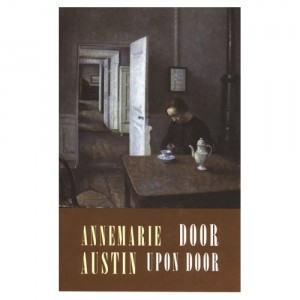
MmSeason (mand) wrote in to recommend the work of Annemarie Austin, a British poet who lives in Weston-super-Mare. Very (2008) is Austin’s most recent collection; mand recommends in particular Door upon Door (1999), which she’s currently in the middle of reading. (Note: Door Upon Door is currently out of print, but many of the poems from it have been republished in Very.) mand, on Austin: She bowls me over. “We have our own concerns – / as the snail on the stem / slides on its one foot upward, / despite the dragon arriving / through the adjacent trees …” […]


Shop Talk |

In Praise of Brevity, Part II: how the Kindle might help popularize the short story

A. O. Scott, from this weekend’s NY Times: “And just as the iPod has killed the album, so the Kindle might, in time, spur a revival of the short story. If you can buy a single song for a dollar, why wouldn’t you spend that much on a handy, compact package of character, incident and linguistic invention? Why wouldn’t you collect dozens, or hundreds, into a personal anthology, a playlist of humor, pathos, mystery and surprise?”


Reviews |

The First Person and Other Stories, by Ali Smith

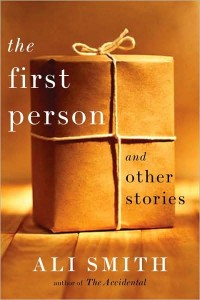
The dozen stories in The First Person, Ali Smith’s latest collection, are deceptively simple: no verbal pyrotechnics, no otherworldly setting, no last-minute epiphanies, and most of the time, no traditional rising action or climax. They’re told in a simple, conversational tone, often by a narrator who could be Ali Smith herself. But they stay with you long after you’ve finished reading them. They sneak up on you, camouflaged as innocuous little anecdotes about innocuous little interactions and misunderstandings, and only later do you realize they’re asking the most fundamental questions that fiction, or life itself, can ask.


Shop Talk |

In Praise of Brevity, Part I: a "balm for those who fear brusqueness"

For The Smart Set, Ryan Bigge offers this thoughtful history of concision in writing, from Zen koans and poetry to the telegram, to Twitter. (Thanks, Kathryn, for the link.) Through a series of wide-ranging examples (including a four-minute/one-word-in-variations scene from HBO’s The Wire and a single-character telegraph from Oscar Wilde to his publisher), he suggests that Twitter, far from symbolizing the end of thoughtful communication, evolves from an age-old writerly value: economy. Positing that “constraints generate creativity and that the utility of concision depends on context,” Bigge also acknowledges that “being laconic can […] belittle,” and that working in a […]