There's a Crowd on My Desk
by M. Allen Cunningham
Gadgets, online personae, and constant motion threaten the extinction of solitude. Does our need for incessant connection threaten creativity?

Gadgets, online personae, and constant motion threaten the extinction of solitude. Does our need for incessant connection threaten creativity?

What do books about octogenarians share with teen vampire novels? Four recent books with more angst than a high school cafeteria.
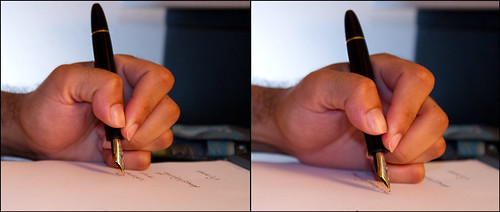
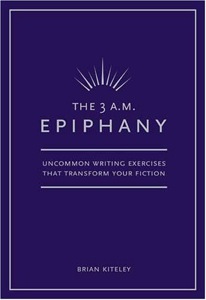
A critique of Brian Kiteley’s The 3 A.M. Epiphany, and how to fix the workshop model.

Big events alone do not a memorable story make. Celeste Ng on why certain stories succeed, and leave a lasting impression.

If description is the art of distillation, what’s the ideal potato-to-vodka ratio? Sit down and stay awhile: things are about to get metaphysical.
Poetry—it isn’t just for poets! In her latest column, Katie Umans recommends straying from fiction with the following books: Kingdom Animalia, Something in the Potato Room, Le Spleen de Poughkeepsie, and Lucky Fish.
Celeste Ng offers compelling proof that storytellers aren’t so different from scientists: both explore the same very large, very dark, very crowded room, poking and prodding and tirelessly asking, what if?

TV, greed, comfort, surprise: but a few of the reasons sequels bewitch us. Why we love more – more story, more character. How sequels draw us in, why we crave them, and which ones we’d pay a million bucks to see in print.
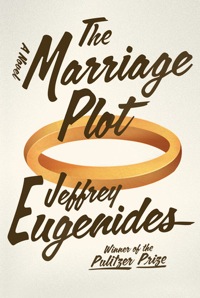
Marriage is so last century. Natalie Bakopoulos contemplates the demise of the marriage plot and Jeffrey Eugenides’s complex, undermining revival of it in his aptly-titled novel, The Marriage Plot. Is love still the ultimate trump card? Dear reader, it is. With some qualifications.
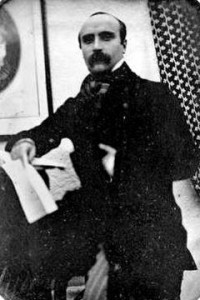
“What a bitch of a thing prose is!” Gustave Flaubert wrote in a letter to his lover Louise Colet in 1852. “It’s never finished; there’s always something to redo. Yet I think one can give it the consistency of verse. A good sentence in prose should be like a good line in poetry, unchangeable, as rhythmic, as sonorous.” In this essay, contributing editor Travis Holland meditates on Flaubert’s influence and legacy in fiction.
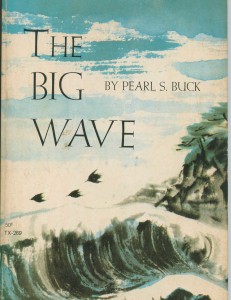
What do the 2011 Japanese Tsunami, the Cuban Missile Crisis and one family’s personal heartbreak have in common? For Ellen Prentiss Campbell the answer lies in Pearl S. Buck’s 1948 young adult novel The Big Wave and the individual acts of creative defiance that help survivors not only carry on, but value life’s beauty more highly because they know it will not last.