Quotes & Notes: The Double-Edged Sword of Creative Community
by Steven Wingate
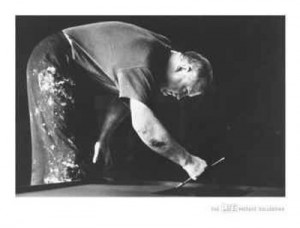
“Stopped hanging other people’s art.”
— a journal entry by Ad Reinhardt (1913-1967)
“Stopped hanging other people’s art.”
— a journal entry by Ad Reinhardt (1913-1967)
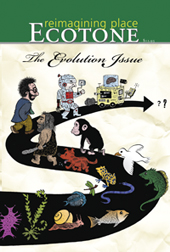
Andrea Nolan examines the new “nature writing” taking place in such journals as Ecotone, Flyway, Orion, and Fourth River, as well as how environment shapes the work of all contemporary writers.
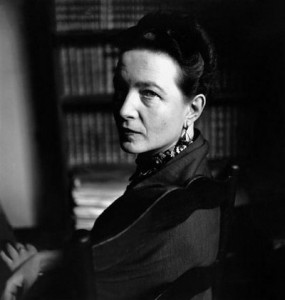
“One is not born a genius, one becomes a genius.”
— Simone de Beauvoir
“For those of you who have yet to publish your first book, I can predict with about 96% certainty how it will go: It won’t happen when you want it to, or in the way you expect. Of course it’ll take longer than you want — you know that. It’ll take so long you could grow a tree, learn forestry and paper-making, then print and bind it yourself and carry it by hand to every last remaining independent bookstore in the country. That is, if you don’t succumb first to addiction, poverty, despair, humiliation, or suicide. In short, it will take longer than you think you can stand, and yet, in the end, as you struggle to make your last-chance, oh-my-God-this-is-going-out-in-the-world? revisions, you’ll inevitably feel rushed and wonder where all that time went.”
“When I was asked whether I’d be interested in taking part in a panel on turning the MFA thesis into a first book, I said yes right away, but I wasn’t sure what I could contribute. In fact, I felt like a bit of a fraud because my journey from the thesis to the published book was so long and roundabout. But I’ve convinced myself that this is part of what makes my story worth telling here, because long and roundabout might be just as common as quick and straightforward, and my particular kind of roundabout experience makes me feel emboldened to give certain bits of advice.”

“During my years as a bookseller, I cherished the opportunities to talk with fellow readers who were enthusiastic about books: how we read them, why we read them, where we read them—you name it. And whether mysteries or metaphysics, non-fiction or nature writing, Chaucer or children’s literature, there was a world of writing to discuss, much of which I had never heard of. I loved nothing more than learning and contributing to that community. It is this same sense of community that we try to foster at Fiction Writers Review. One that is made up of tastes and interests as divergent and varied as our contributors. But if there’s one unifying element, I have to say it’s that very same enthusiasm for books. An unabashed, unapologetic, earnest love of ‘shop talk.'”
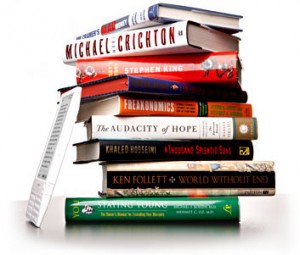
Today’s technological delights are well on their way to becoming tomorrow’s demands, entrenching themselves in ways that will do more than force bookbinding as a business model to adapt, but allow writing, as an art form, to expand and thrive. These are good things. Welcome to the age of Binary Bookmaking.
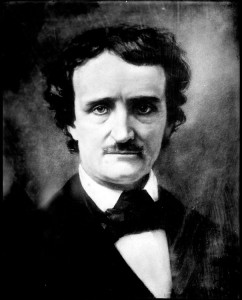
“Were I called on to define, very briefly, the term Art, I should call it ‘the reproduction of what the Senses perceive in Nature through the veil of the soul’.” –Edgar Allan Poe
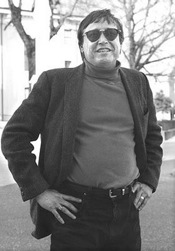
This morning I woke to hear the sad news that Barry Hannah had died. He was 67, and the apparent cause was a heart attack, according to the Jackson Free Press. Barry had had several bouts with cancer over the last ten years, yet I was still shocked to hear that he was gone. I guess I’d come to think of him as oddly invincible.
Every book we feature on Fiction Writers Review has won the admiration of our reviewers. But because it’s a new year, and it’s award season, and today is the official holiday of love, we asked our contributors to tell us which books of 2009 they most adored, cherished, and crushed on. What we received often transcended mere lists; writers shared why these certain books affected them, woke them up, even made them jealous. So in addition to the “favorites” that received the most votes, we’ve also included some of these endorsements and mini-reviews. Most selections are arranged by genre (Novel, Story Collection, etc.), and then there are less conventional categories–like Book You Loved But Would Be Embarrassed to Be Caught Reading.
For some time I was one of few standing firmly in both camps—writer and gamer, fiction-fiend and pixel-popper. But the innovative nature of Next-Gen gaming, with its leaps in technology and massive install-base, means games have developed new depth–and the future of gaming promises to look a lot more like literature than flight simulators. This is, in many ways, the rise of a new novel. Like its lexicographic predecessor, the pixilated form revels in moral ambiguity, character motivations, conflicts between free will and fate.
For some time I was one of few standing firmly in both camps—writer and gamer, fiction-fiend and pixel-popper. But the innovative nature of Next-Gen gaming, with its leaps in technology and massive install-base, means games have developed new depth–and the future of gaming promises to look a lot more like literature than flight simulators. This is, in many ways, the rise of a new novel. Like its lexicographic predecessor, the pixilated form revels in moral ambiguity, character motivations, conflicts between free will and fate.