

Suspend Your Disbelief

Celeste Ng

Editor at Large

Celeste Ng is the author of the novels Everything I Never Told You  (2014) and Little Fires Everywhere (2017). She earned an MFA from the University of Michigan (now the Helen Zell Writers’ Program at the University of Michigan), where she won the Hopwood Award. Her fiction and essays have appeared in One Story, TriQuarterly, Bellevue Literary Review, the Kenyon Review Online, and elsewhere. She is the recipient of the Pushcart Prize, the Massachusetts Book Award, the American Library Association’s Alex Award, and a fellowship from the National Endowment for the Arts. She lives in Cambridge, Massachusetts.


Articles

Shop Talk |

Quick, why do you write?

Can you explain why you write in 140 characters or less? In response to a question by agent Jason Ashlock, hundreds of people have been trying with the hashtag #whyIwrite on Twitter. Here are some of their responses, which range from the humorous to the downright profound: ANaderGretly: #WhyIWrite Because it’s an excuse to do research on strange subjects, i.e. Serial killers and forensic psychology. ANaderGretly: #WhyIWrite Because I’d rather be a poor writer, than to be a wealthy engineer. RJSWriter: #whyiwrite 2/2 so by passing what we _can_ see through the lens of imagination, we hope that some of […]


Shop Talk |

Tick, tick, tick… BOMB Magazine's 2011 Fiction Contest now open

BOMB Magazine is now accepting submissions for its fifth Fiction Contest. This year’s judge is Rivka Galchen, author of the novel Atmospheric Disturbances. The winner will receive $500 and publication in First Proof, BOMB’s literary supplement. The contest deadline is April 16, 2011. Don’t know BOMB? We’re pleased to introduce you. A quarterly lit mag, BOMB Magazine was founded in 1981 and features interviews, original writing, and reviews. Says the journal’s website: BOMB was named after Wyndham Lewis’s Blast, a 1917 journal edited by artists and writers. Following in this tradition, BOMB’s editors are also all practitioners of the arts. […]


Shop Talk |

Busby Berkeley, meet Bookshelf.

Ever wish your books would just organize themselves? This stop-motion animation by artists/designers Sean Ohlenkamp and Lisa Blonder Ohlenkamp shows the crazy hijinks that might ensue: I keep wondering: what happened to the banana at the end? The complete list of “credits” is at the end of the animation, but I bet you can name some of the books from their covers alone. Via.


Shop Talk |

Thursday Morning Candy: The Grub Street Daily

“Grub” and “candy” probably don’t go together in your mind, but trust me, this week’s Thursday Morning Candy is delicious. The Grub Street Daily is the new daily blog from Grub Street, an independent, nonprofit writing center in Boston. (Disclaimer: I teach there!) The newly launched site offers quotes, prompts, and exercises; publishing success stories; and quirky blog posts like Tara Masih’s thoughts on a writer’s Oscar acceptance speech. There’s even a weekly advice column, “Friday Five-O,” which answers reader queries such as: Dear Friday Five-O: I have a timeless writing question: how do I make a writing schedule and […]


Shop Talk |

"The blowtorch is the secret weapon in design"

Think book designers are namby-pamby design nerds hunched over their Macs? Think again. The Guardian reveals the secret, extreme lengths designers will go to in order to get that perfect cover: Deputy art director Glenn O’Neill tells me that the original jacket concept for Robert Harris’s Cicero novel, Lustrum, was to feature an image of a raging fire. Not content with plucking any old flame image from a picture library, however, the team set a field in Gloucestershire on fire. (No, it wasn’t arson – they had the farm owner’s permission). “We created a big bonfire from old crates and […]


Shop Talk |

Shakespeare, the paywall, and the benefits of copyright

How did Shakespeare become so great? Economically speaking, it all had to do with market economies—at least according to the New York Times: Those who paid could enter and see the play; those who didn’t, couldn’t. By the time Shakespeare turned to writing, these “cultural paywalls” were abundant in London: workers holding moneyboxes (bearing the distinctive knobs found by the archaeologists) stood at the entrances of a growing number of outdoor playhouses, collecting a penny for admission. At day’s end, actors and theater owners smashed open the earthenware moneyboxes and divided the daily take. From those proceeds dramatists were paid […]


Shop Talk |

Researching the details in fiction

Mary Roach is my favorite nonfiction writer—partly because she’s wickedly funny, and partly because we share the same fascinated appreciation for the absurd. I’ve been a huge fan since her first book, Stiff, which is about the various uses of human cadavers. In it and all her other books (Spook, about science and the afterlife; Bonk, about science and sex; and Packing For Mars, about manned space exploration), Roach unearths details that are just too crazy to make up—such as the fact that a dead pope is struck on the forehead with a special hammer to be sure he’s really […]


Shop Talk |

Oh, The Things Your Book Can Do!

It’s an end table. No! It’s a lampshade. No! It’s… Today at Fiction Writers Review, we present you with three more things your book can do. 1. Books as handbags Craft podcast Curbly presents step-by-step instructions for turning your favorite tome into a purse. For the gentlemen, perhaps a large volume, like an atlas, could be used to make a stylish attache? 2. Kindle cover Love your Kindle, but want to maintain street cred with the paper-book-loving crowd? Instructables shows how to craft a Kindle cover from an old hardback. Now you can enjoy the hi-tech benefits of an e-reader […]


Shop Talk |

Anthony Doerr wins 2010 Story Prize

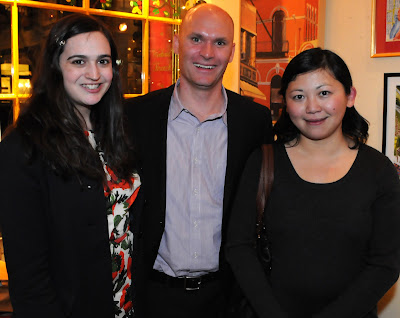
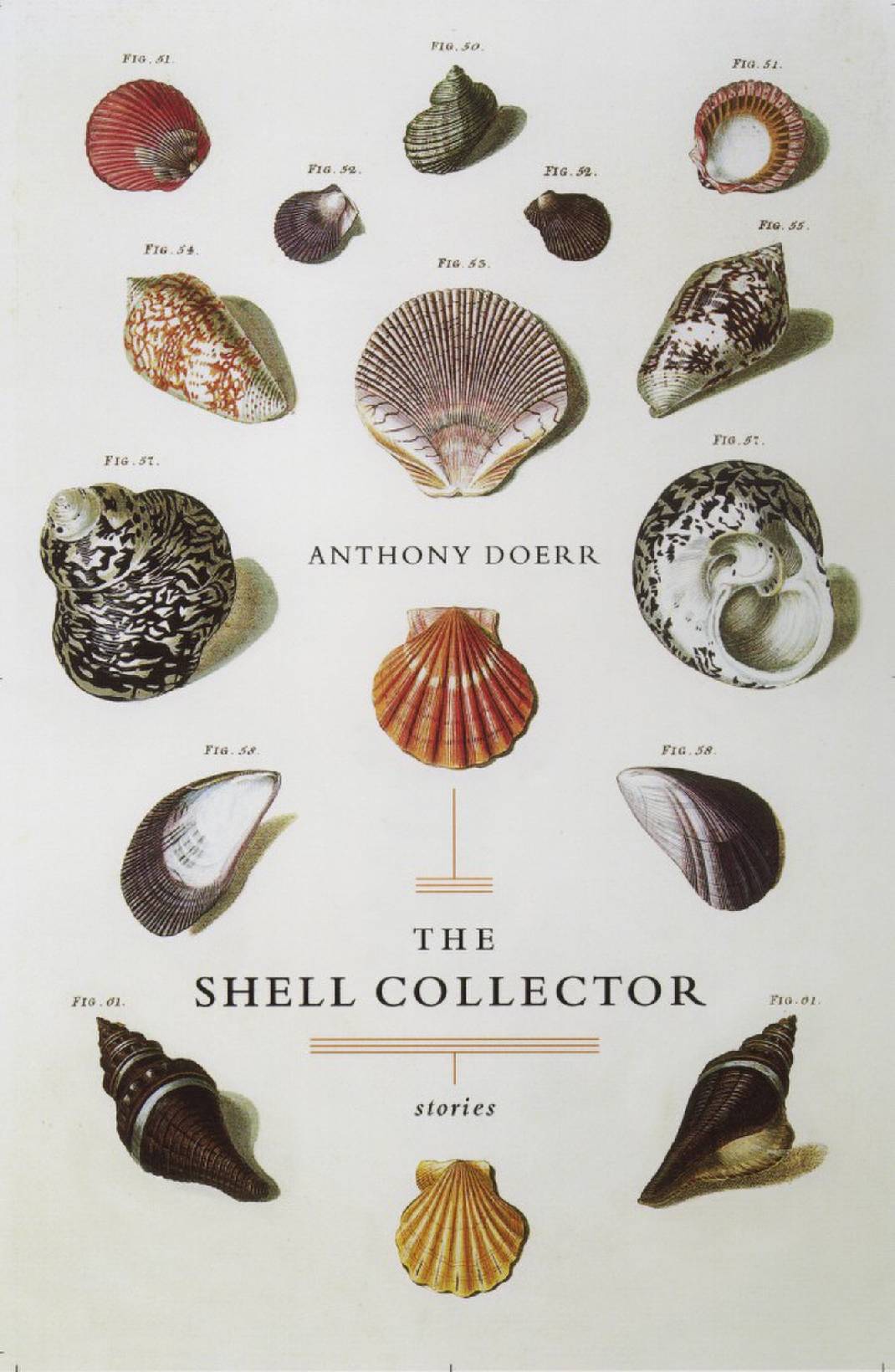
On Wednesday, Anthony Doerr was awarded the 2010 Story Prize for his collection Memory Wall. The ceremony also honored two finalists, Yiyun Li and Suzanne Rivecca. Reports the Story Prize’s blog: Anthony Doerr, for instance, in answer to a question about the preponderance of older women in Memory Wall, talked about how his grandmother, who had Alzheimer’s disease, came to live with his family when he was in high school and how, in his teenage self-absorption, he had been somewhat oblivious to her condition. Yiyun Li discussed how her characters stubbornly resist being swept along by the tide of history—even […]