Jess Row’s second collection of stories, Nobody Ever Gets Lost, is an examination of some of our most intense impulses, and the debates, quandaries, and mysteries in these seven stories will stay with you. Charlotte Boulay talks to Jess Row about the intersection between compassion and extremism.
The Half-Known World, Robert Boswell’s collection of essays on the craft of fiction writing, is also driving-idea behind his conversation with Michael Hinken. In it Boswell discusses the power of writing better sentences, characterization as jazz, the narrative brain versus the linear brain, the value of writing fifty drafts and other mysteries and wonders of the half-known world.
Nobody advised Josh Weil to write three novellas for his first book, The New Valley, but that’s what he did. Mary Westbrook and the author talk about the stories behind the novellas and how well-intentioned advice can lead writers astray.
A shoebox full of the mementos of a Parisian woman Sparked Elena Mauli Shapiro’s debut novel, 13, rue Thérèse. The objects fall into the hands of a fictional researcher, and through the sifting of photographs, letters and souvenirs a life emerges. Steven Wingate and Shapiro discuss research, happy accidents, and the power of what we save.
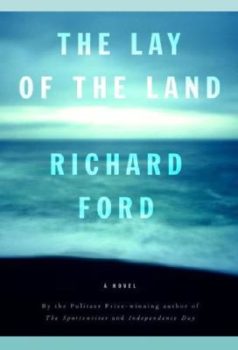
In this lively conversation, Travis Holland and author Richard Ford discuss the genesis of Ford’s most famous fictional character, Frank Bascombe, the importance of always remembering the reader, greeting cards, what could well be one of the greatest short stories of the 20th century, and why place in fiction means nothing.
Reading Deanna Fei’s debut novel, A Thread of Sky, rescued Kate Levin from a giant post-MFA funk. In this conversation with Levin, Fei discusses the role cultural identity plays in a writer’s persona and work, the value of unknowability, the secret to writing great sex scenes, the reason she watches Jersey Shore—and more.
In this conversation with FWR’s Laura Valeri, Susanna Daniel discusses her debut novel, the fictional memoir Stiltsville, and shares her insights on the process of writing, the power of quiet stories—which she terms eminently readable—and the perseverance and faith that writers must nurture for their own work.
In her debut collection, Before You Suffocate Your Own Fool Self, Danielle Evans’s characters, like most of us, struggle to belong. Their loyalties to place, to family, and to self are often divided. Melissa Scholes Young interviews the author to find out how the identities we claim or deny often define the people we become.
Where do film noir, post-communist Bulgarian fiction, and black comedy intersect? In Vladislav Todorov’s searing noir-meets-social-commentary novel, Zift. Contributing Editor Steven Wingate and Todorov discuss poisonings, the resurgence of narrative fiction in post-communist Eastern Europe, the idea that “many people enjoyed spying on their neighbors” for the state, and much more.
In Meg Pokrass’ debut collection of flash fiction, Damn Sure Right, each story gives the reader just enough to imagine a universe. Lee Thomas and Pokrass discuss first publication, the harmony between poetry and short short stories, and the soundtrack to the author’s creative process.
Debut novelist Urban Waite enjoys a character-driven thriller, which is exactly what he delivers with The Terror of Living. In conversation with Cam Terwilliger, Waite reveals how the selfish characters of Graham Greene shaped his idea of the perfect book, how an editor who understands the writer’s vision can only help a book, and how flexibility can be the novelist’s best friend.
“We create things that we hope will, someday, become objects of value. In the wake of the 9/11 attacks, many writers–Foer, DeLillo, and Roth, to name just a few–all came out with 9/11 novels. I was initially bothered by this. I wanted to say, ‘Fuck you; I was there.’ This passed for a couple reasons. First was the realization that we’re all survivors of one type or another. Second, these texts can never really become authoritative positions on the experiences of a group of people, no matter how well written they are or how well credentialed their creators might be. There’s no uniform experience of being a 9/11 survivor, no uniform experience of being a woman. These are things that can’t be owned by anyone.”