Suspend Your Disbelief

Essays

Essays |

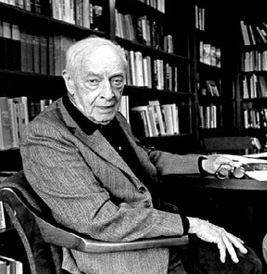
The Confusing Pleasures of Reading Saul Bellow, Pt. 1

In this two-part essay, Daniel Wallace devotes himself to the work of Saul Bellow for a season. Total immersion in Bellow’s progress as a writer reveals the perplexing philosophical problems at the heart of many of the novels, the difference between early and later books, and the unadulterated beauty of Bellow’s paragraphs.


Essays |

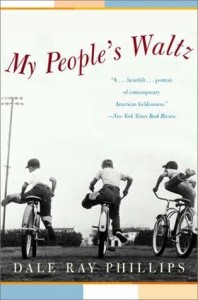
The Sorrow and Grace of My People’s Waltz, by Dale Ray Phillips

Forrest Anderson on the semester he “caught fire as a writer,” when Ron Rash handed him a life-changing copy of Dale Ray Phillips’s debut, My People’s Waltz. Anderson describes the exquisite moments of grace in the collection when “all of the bad things to come are brewing on the horizon but haven’t yet managed to fully snag the family.”


Essays |

Looking Backward: Third-Generation Fiction Writers and the Holocaust

As the annual observance of Yom Hashoah (Holocaust Remembrance Day) approaches, Erika Dreifus discusses the literary kinship among works from an emerging cohort of “3G” (third-generation) Jewish writers: Julie Orringer’s The Invisible Bridge, Alison Pick’s Far to Go, and Natasha Solomons’ Mr. Rosenblum Dreams in English.


Essays |

In Other Words

Raised in Greece during its period of intensive Westernization, Giota Tachtara lived all her life among things that had two names, two qualities, two associations, and two accents: one in Greek and one in English. Now, as an American resident, she roots through her bilingual bookcase and writes about the narrator in her head who’s caught in the middle.


Essays |

Some Thoughts on Reviewing Poetry in 2011

In the final essay in our series on criticism, Keith Taylor recalls the pleasure of a “chance to review a new collection of poems in a place where several thousand people might read it, and to actually be paid something for our labors.” Has the Internet created room for “a more expansive tone to the discussion of contemporary poetry” – or made an already diminishing realm more clubby? Taylor’s experience as both poet and reviewer reveals the shaping potential of creating art and criticism.


Essays |

An Education in Book Reviews

Third in our series on criticism, Stacey D’Erasmo’s essay tackles the misconception that reviewing “is, at best, a career opportunity and, at worst, a distasteful and potentially troublesome task best avoided.” In particular, she addresses the fact that the culture of the MFA program may have steered fiction writers away from the craft of reviewing. Yet she urges us to remember that many of our greatest writers were also critics who engaged in the vigorous cultural conversation that centers on books. And that it’s not only necessary for us to revive this discussion, but also a pleasure to be involved.


Essays |

Owl Criticism

In this essay, Baxter writes that a trustworthy review has “a kind of doubleness: the reviewer manages to assert somehow that the book under discussion is of some importance for one reason or another; and second, a good review provides a formal description of the book’s properties, so that you could reconstruct it from the reviewer’s sketch of it.”


Essays |

The Good Review

Earlier this month, Editor Jeremiah Chamberlin moderated a panel on criticism at the 2011 AWP Conference entitled “The Good Review: Criticism in the Age of Book Blogs and Amazon.com.” Joining him were Charles Baxter, Stacey D’Erasmo, Gemma Sieff, and Keith Taylor. In this essay, adapted from his talk at that panel, he discusses why liking a book should have nothing to do with a review, and how this thoughts on criticism have changed since running an independent bookstore.