Suspend Your Disbelief

Recent Posts

Shop Talk |

In Praise of Brevity, Part II: how the Kindle might help popularize the short story

A. O. Scott, from this weekend’s NY Times: “And just as the iPod has killed the album, so the Kindle might, in time, spur a revival of the short story. If you can buy a single song for a dollar, why wouldn’t you spend that much on a handy, compact package of character, incident and linguistic invention? Why wouldn’t you collect dozens, or hundreds, into a personal anthology, a playlist of humor, pathos, mystery and surprise?”

Reviews |

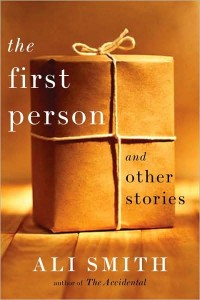
The First Person and Other Stories, by Ali Smith

The dozen stories in The First Person, Ali Smith’s latest collection, are deceptively simple: no verbal pyrotechnics, no otherworldly setting, no last-minute epiphanies, and most of the time, no traditional rising action or climax. They’re told in a simple, conversational tone, often by a narrator who could be Ali Smith herself. But they stay with you long after you’ve finished reading them. They sneak up on you, camouflaged as innocuous little anecdotes about innocuous little interactions and misunderstandings, and only later do you realize they’re asking the most fundamental questions that fiction, or life itself, can ask.


Shop Talk |

In Praise of Brevity, Part I: a "balm for those who fear brusqueness"

For The Smart Set, Ryan Bigge offers this thoughtful history of concision in writing, from Zen koans and poetry to the telegram, to Twitter. (Thanks, Kathryn, for the link.) Through a series of wide-ranging examples (including a four-minute/one-word-in-variations scene from HBO’s The Wire and a single-character telegraph from Oscar Wilde to his publisher), he suggests that Twitter, far from symbolizing the end of thoughtful communication, evolves from an age-old writerly value: economy. Positing that “constraints generate creativity and that the utility of concision depends on context,” Bigge also acknowledges that “being laconic can […] belittle,” and that working in a […]


Reviews |

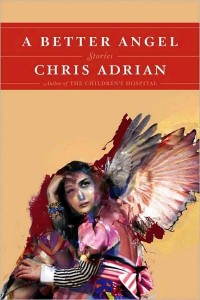
A Better Angel, by Chris Adrian

The stories in Chris Adrian’s third book (and first story collection) are idealistic, relentlessly imaginative and existentially harrowing—(Flannery O’Connor/Lorrie Moore) x Kafka=Chris Adrian. Using a unique mixture of shocking imagery and surprising tenderness, Adrian illuminates the pathologies of the trauma-battered, those stricken by grief or illness who choose to funnel their angst into healing or annihilating activities. The results are individual, startling, and luminous.


Shop Talk |

since it's National Poetry Month…

I’m going to waive the whole “all fiction, all the time” rule and devote some space to poetry on FWR. Fiction writers benefit enormously from reading poetry, and many of us (yours truly included) tried our hand at–or continue to secretly aspire to–being poets. At FWR, a number of our contributors and readers are poets (the out kind!), and I’m wondering if you’d take a few minutes to tell us: What poets or new, recent, or classic books of poetry are you reading? Poets (and fiction writers, too, if you’re game), please send any and all recommendations to either annestameshkin@gmail.com […]


Shop Talk |

Travis Holland on Impac Shortlist!

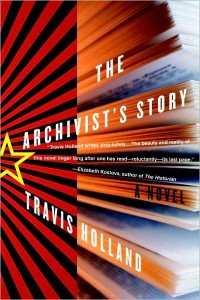
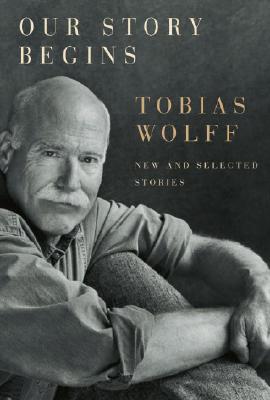
Even if you haven’t read his interview with Tobias Wolff or Jeremy’s interview with him on FWR, I hope you’ve all read Travis Holland’s astoundingly good, non-debutish debut novel The Archivist’s Story–which is now on the Impac Dublin shortlist, chosen over the works of literary heavyweights like Coetzee and Roth. Courtesy of the Guardian, here’s the full shortlist; the winner (who wins an award of €100,000) will be announced on June 11, 2009. The Brief Wondrous Life of Oscar Wao by Junot Díaz Ravel by Jean Echenoz The Reluctant Fundamentalist by Mohsin Hamid The Archivist’s Story by Travis Holland The […]


Shop Talk |

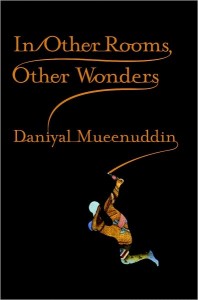
recommended Book Tour podcast: Daniyal Mueenuddin and Justin Torres

When Alan Cheuse spoke with FWR last month, he highly recommended Daniyal Mueenuddin’s story collection, In Other Rooms, Other Wonders, a book now teetering at the top of my “must-read” pile. In the meantime, we can all hear Mueenuddin read from his work via this NPR podcast from a recent Granta-sponsored event at McNally Jackson. Also on the bill is emerging writer Justin Torres (currently a student at the Iowa Writers Workshop, formerly a McNally Jackson employee), whose fiction has appeared in Tin House, Granta, and other magazines; here, he reads “Lessons,” a three-part story published in Granta 104: Fathers.


Shop Talk |

Andrew's Book Club: April Picks

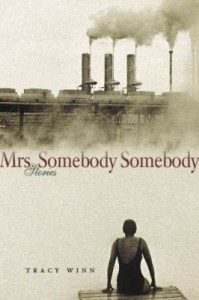
Here they are, the April collections Andrew urges us to buy, read, and recommend. This month, all three books are debuts. Viva la short story–and the emerging writer! University Press Pick: Tracy Winn’s Mrs. Somebody Somebody (Southern Methodist UP) Indie Pick: Paul Yoon’s Once the Shore (Sarabande) Big House Pick: Kevin Wilson’s Tunneling to the Center of the Earth (Harper Perennial)


Shop Talk |

Sunday browsing

Take a tour of The Most Interesting Bookstores of the World. And visit Zoomii.com, which offers a “real bookstore” browsing experience but links to Amazon for actual checkout. I wish (1) that you could look inside this book during this part of the process and (2) that you could use such a service to shop at indie stores.


Shop Talk |

Jeremiah Chamberlin wins Glimmer Train's Family Matters Fiction Prize!

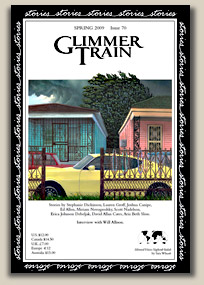
Huzzah and huge congrats to Jeremy, FWR’s Associate Editor, whose story “What We Can” has captured the $1200 first prize in Glimmer Train‘s Family Matters contest. Runners-up were, for second place, Yuval Zalkow for “God and Buses,” and for third place, Adam Theron-Lee Rensch for “Everything in Its Right Place.” The full list of finalists is available as a PDF here. Be sure to check out Glimmer Train‘s Summer 2010 issue, where “What We Can” will appear, or get a jump on it and subscribe now to one of FWR’s favorite literary magazines.